Free Printable Communication Cards | AAC Guide – Free printable communication cards are visual tools that help people express needs, feelings, choices, and basic requests when speech is limited or unavailable. They typically show simple pictures or symbols paired with short words or phrases. Users point to a card or hand it over so others can understand them quickly.
These cards support augmentative and alternative communication (AAC). They are useful for children and adults with autism, speech delays, aphasia, developmental disabilities, or temporary communication barriers such as hospital stays. In the USA, parents, teachers, speech-language pathologists, and caregivers often start with low-tech printables because they are inexpensive, portable, and easy to customize.
Related terms people search for include PECS cards (Picture Exchange Communication System style), AAC picture cards, visual support cards, and core vocabulary boards. Printable versions let you create a starter set at home without buying expensive kits.
Who Benefits From These Cards?
Many families and professionals in the United States use free printable communication cards for:
- Nonverbal or minimally verbal children, especially those with autism spectrum disorder.
- Students in special education or speech therapy settings.
- Adults recovering from stroke or living with aphasia.
- People in medical or emergency situations who need a quick way to communicate pain, needs, or preferences.
- Neurodivergent individuals (including ADHD or sensory processing differences) who find visuals clearer than spoken words during overwhelm.
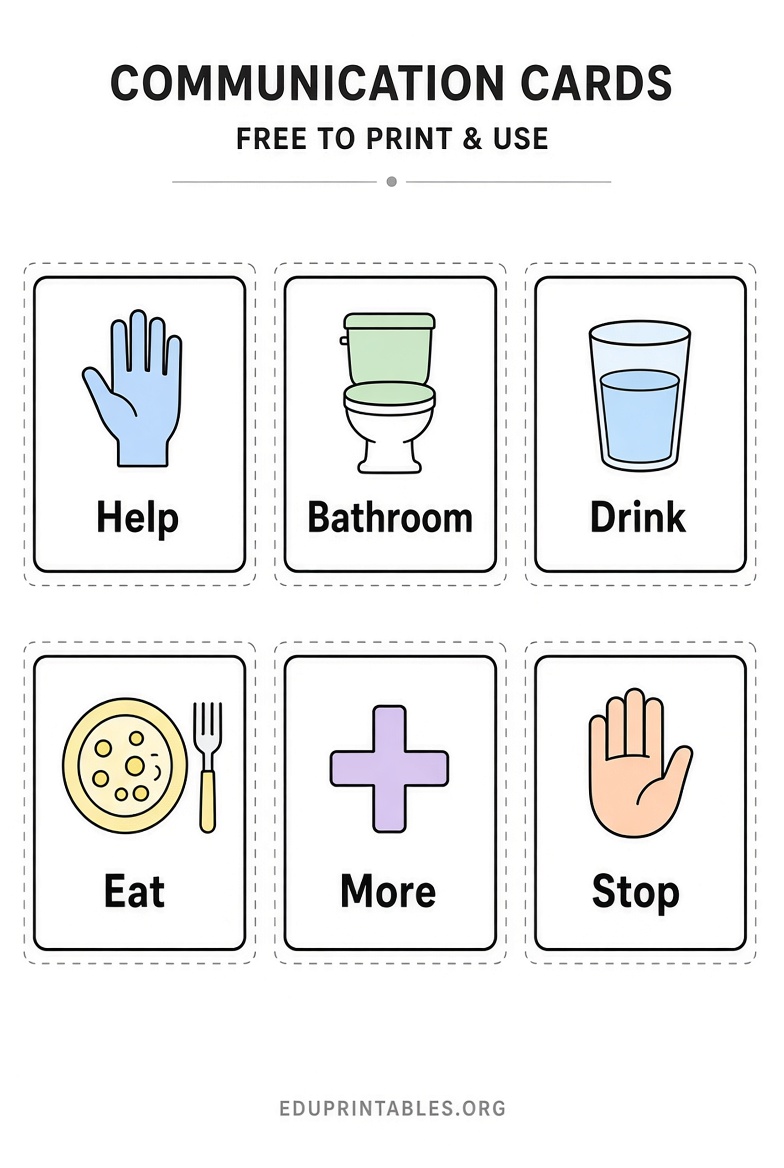
The cards reduce frustration by giving a reliable way to request “help,” “bathroom,” “more,” “stop,” or express emotions like “happy” or “sad.” They work alongside speech development or high-tech AAC devices and never replace professional guidance.
How to Use Free Printable Communication Cards Effectively?
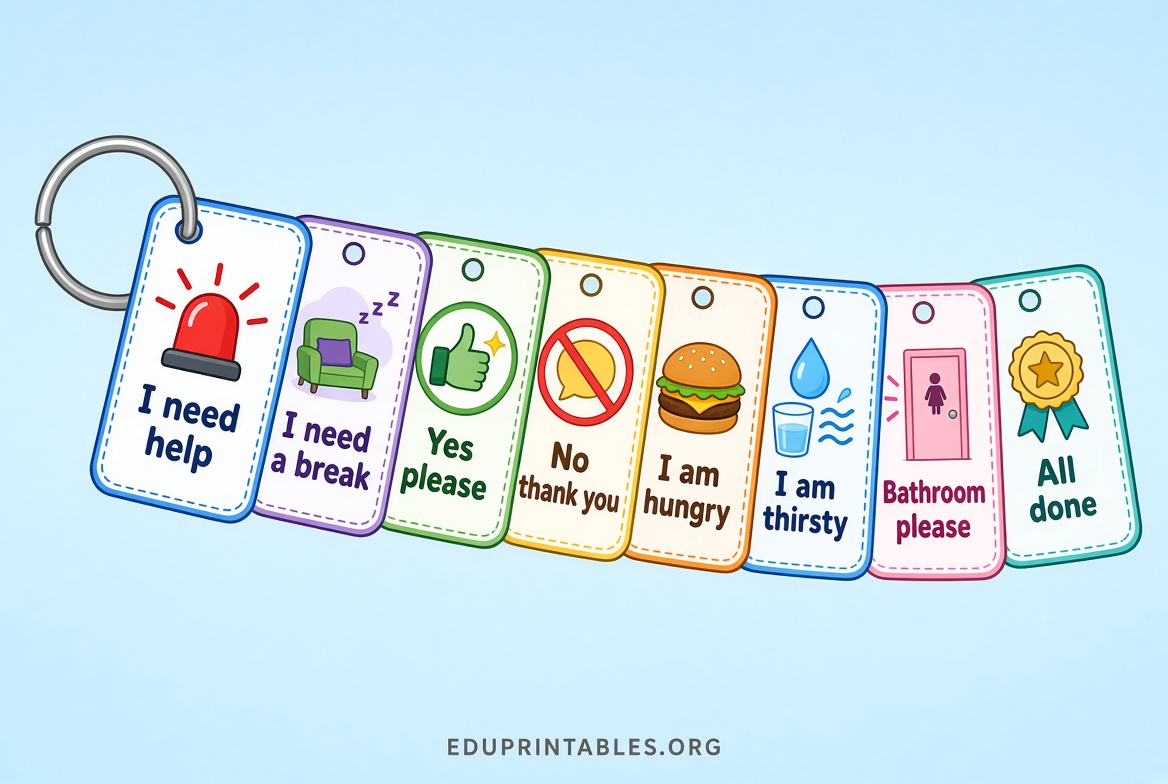
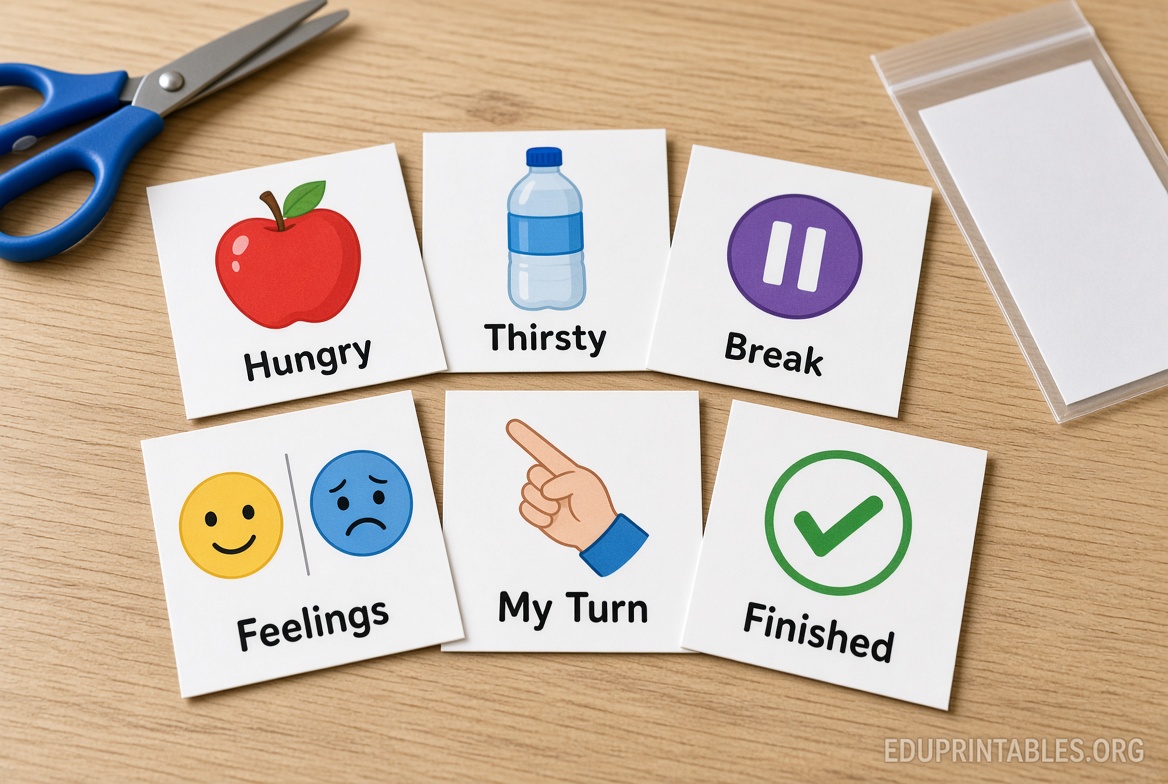
Start small. Choose 4–8 high-priority cards that match the person’s daily needs (eat, drink, toilet, help, yes, no, more, break). Print on cardstock, cut them out, and laminate for durability. Add Velcro dots on the back if you want them to stick to a board, binder, or lanyard.
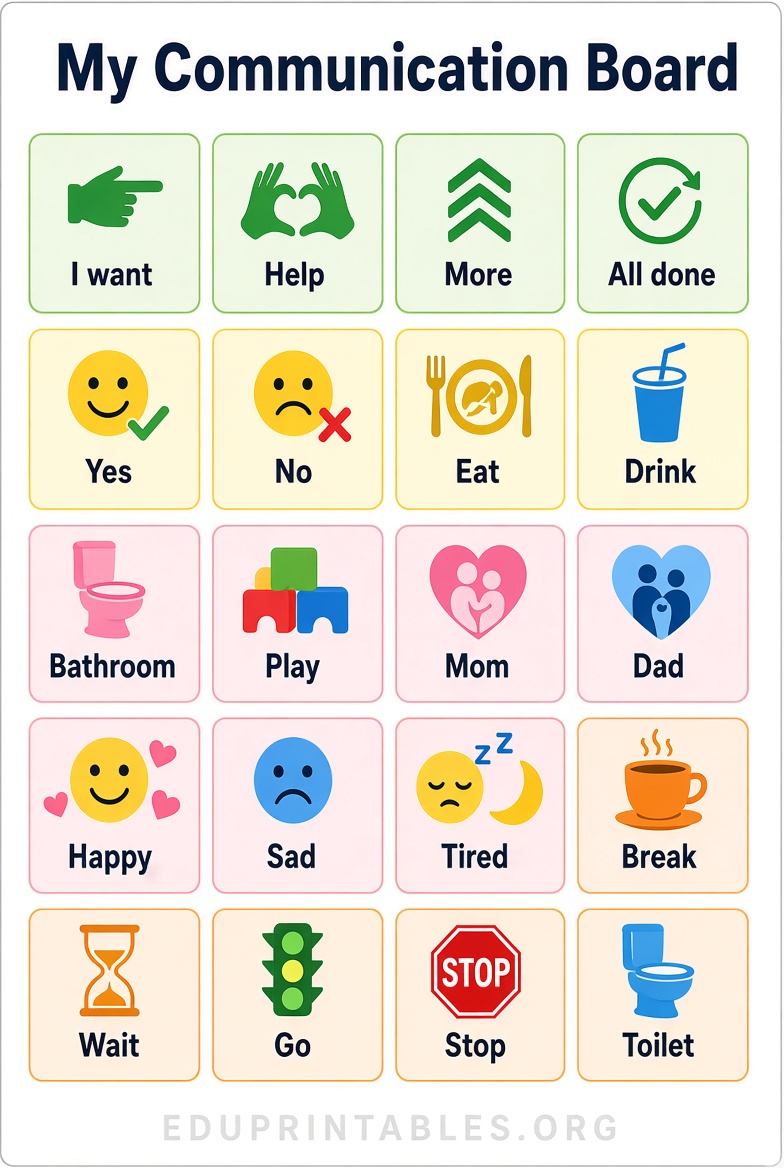
Model the exchange: show the card while offering the item or action, then respond immediately when the person uses it. Consistency builds understanding. As skills grow, add more cards or move to sentence strips (“I want” + picture) and core boards that keep words in fixed positions.
Keep sets in key places—home, classroom, car, or therapy bag. Review cards regularly and replace worn ones. Photos of real objects sometimes work better than generic symbols for specific items.
Trusted Places to Download Free Printable Communication Cards
Here are reliable, current sources that offer genuine free printables or easy makers. Each link goes to the official download or tool page.
Kenhub provides free downloadable PDF communication cards designed for AAC use in healthcare and everyday settings. The set includes color and high-contrast monochrome versions covering needs, emotions, medical symptoms, and personal information. These cards suit both children and adults and are easy to print.
Download Kenhub free AAC communication cards
Spectrum Unlocked offers a free PECS-style card maker and ready-to-print templates with no sign-up required. You can customize symbols or photos, download individual cards or full sets (classroom requests, feelings, food, routines, core words), and print US Letter size sheets.
Get free PECS printables and templates
Social Workers Toolbox hosts a free PDF of 96 visual communication cards organized by themes such as emotional regulation, sensory needs, safety, boundaries, and school support. The set is helpful for neurodivergent children and young people at home or school.
Download free school and neurodiversity communication cards
Lingraphica offers free printable communication boards focused on basic wants and needs plus hospital, ICU, pain, and conversational phrases (available in English and Spanish). These are practical for medical settings and everyday adult use.
Access Lingraphica free communication boards
Project Core (University of North Carolina) provides research-based Universal Core vocabulary boards and supports that you can download and print at no cost. The 36-word system is widely used in U.S. schools and clinics as a starting point for consistent core language.
Download Project Core Universal Core boards
Always verify the current download process on each site, as forms or browser tools may be required. These resources are free for personal and educational use; commercial redistribution is usually restricted.
Free Printable Communication Cards | AAC Guide
Tips for Printing and Customizing in the USA
Use standard US Letter paper or cardstock. Laminate with a home machine or local print shop for longer life. Many libraries and school resource centers offer free or low-cost printing and laminating. Customize labels to match the person’s preferred words or add personal photos for stronger recognition.
Store extra blank cards so you can create new ones quickly when interests or needs change. Pair printed cards with a simple communication book or board for organization.
Brief FAQ
Are PECS cards the same as general communication cards?
PECS refers to a specific teaching method that uses picture exchange. Many free printables follow a similar picture-plus-word style and can support PECS principles, but formal PECS training involves structured phases taught by qualified professionals.
Can I use these cards with adults?
Yes. Hospital-style and core vocabulary boards work well for adults with aphasia, progressive conditions, or temporary speech difficulties.
Do free printables replace speech therapy?
No. They are supportive tools. Consult a speech-language pathologist for individualized recommendations, especially for long-term AAC systems.
How many cards should I start with?
Begin with a small core set of the most frequent requests and expand only after those are used consistently.
Free printable communication cards give families and professionals an immediate, low-cost way to support meaningful interaction. Download a starter set from one of the trusted sources above, print, and begin modeling today. Consistent use helps reduce frustration and opens clearer paths for connection.