Free Printable Low Potassium Foods Chart Guide – A free printable low potassium foods chart helps people manage daily intake when a healthcare provider recommends limiting this mineral. Many adults in the United States follow lower-potassium choices because of chronic kidney disease, dialysis, or elevated blood levels (hyperkalemia). These charts organize common foods by category and serving size so shopping and meal planning stay practical.
This guide explains what low-potassium eating involves, why portion size matters, and where to download legitimate free charts from trusted health organizations. It does not create or host any printable itself. All resources linked below come from outside sources such as the National Kidney Foundation, the American Kidney Fund, and the National Institutes of Health.
What Counts as a Low-Potassium Food?
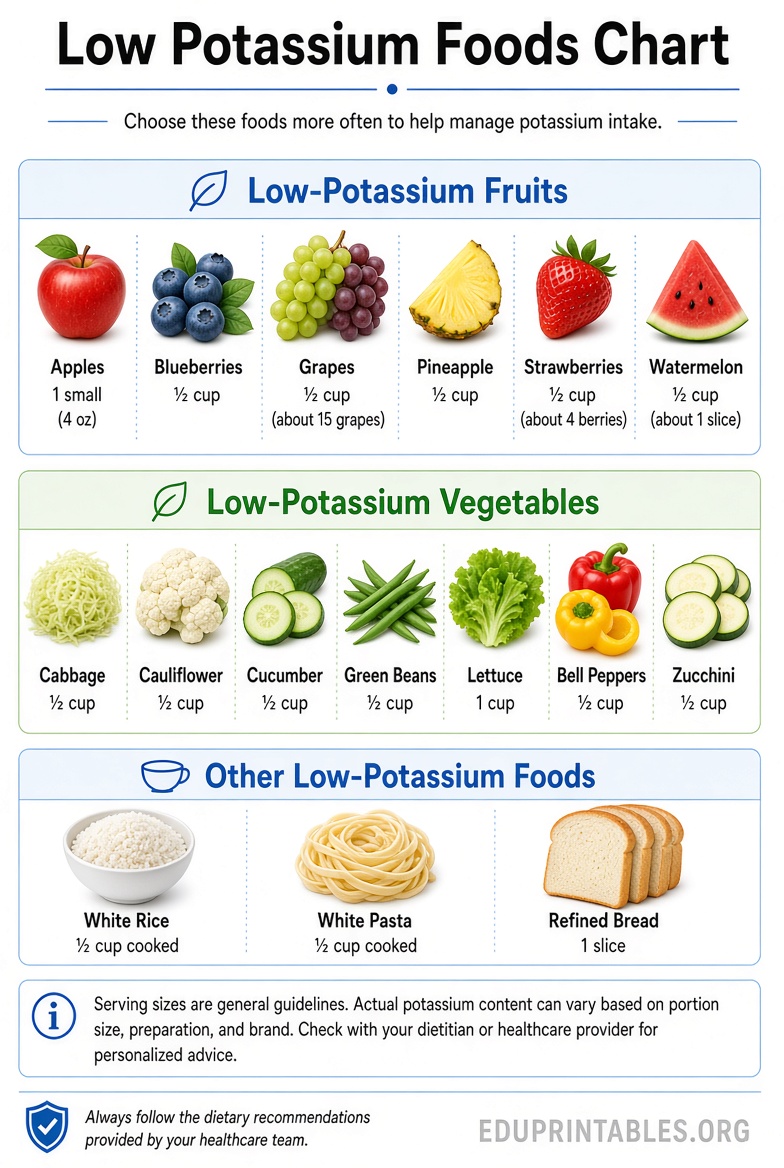
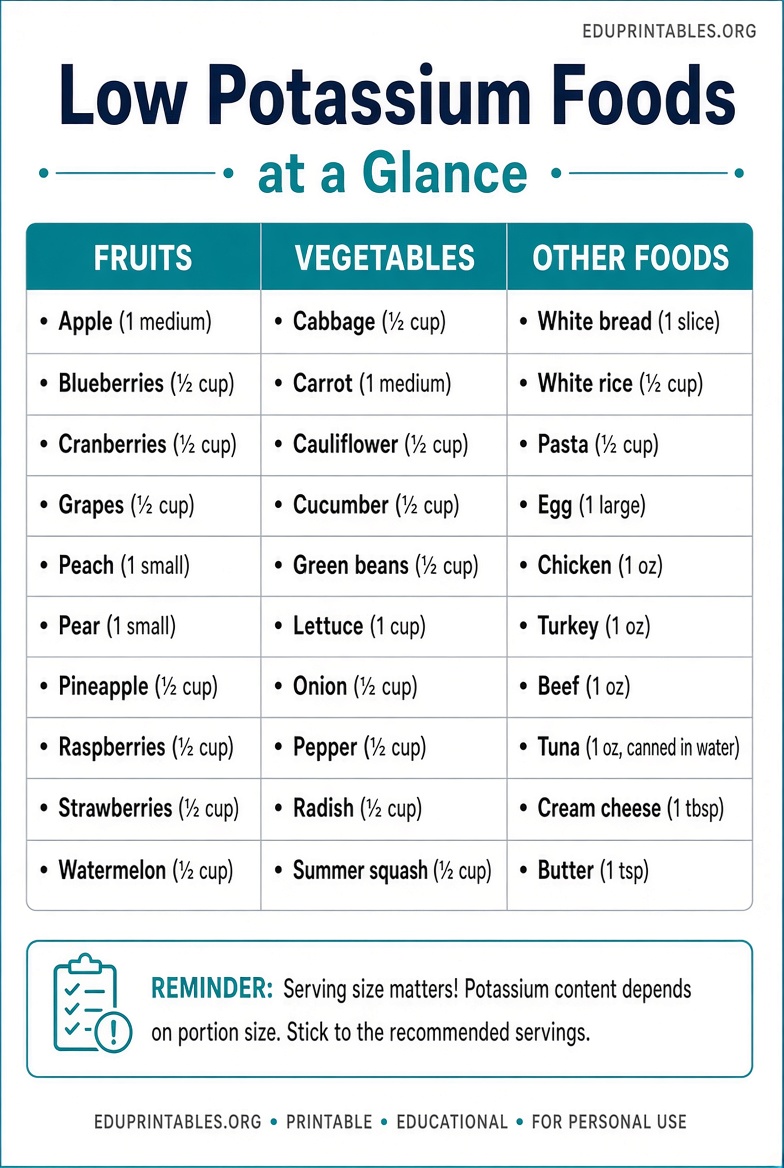
Most renal dietitians describe a low-potassium food as one that contains roughly 200 milligrams or less of potassium per typical serving. A “very low” serving often falls under 100–150 mg. Serving size is critical: a large portion of a lower-potassium food can quickly push the total higher.
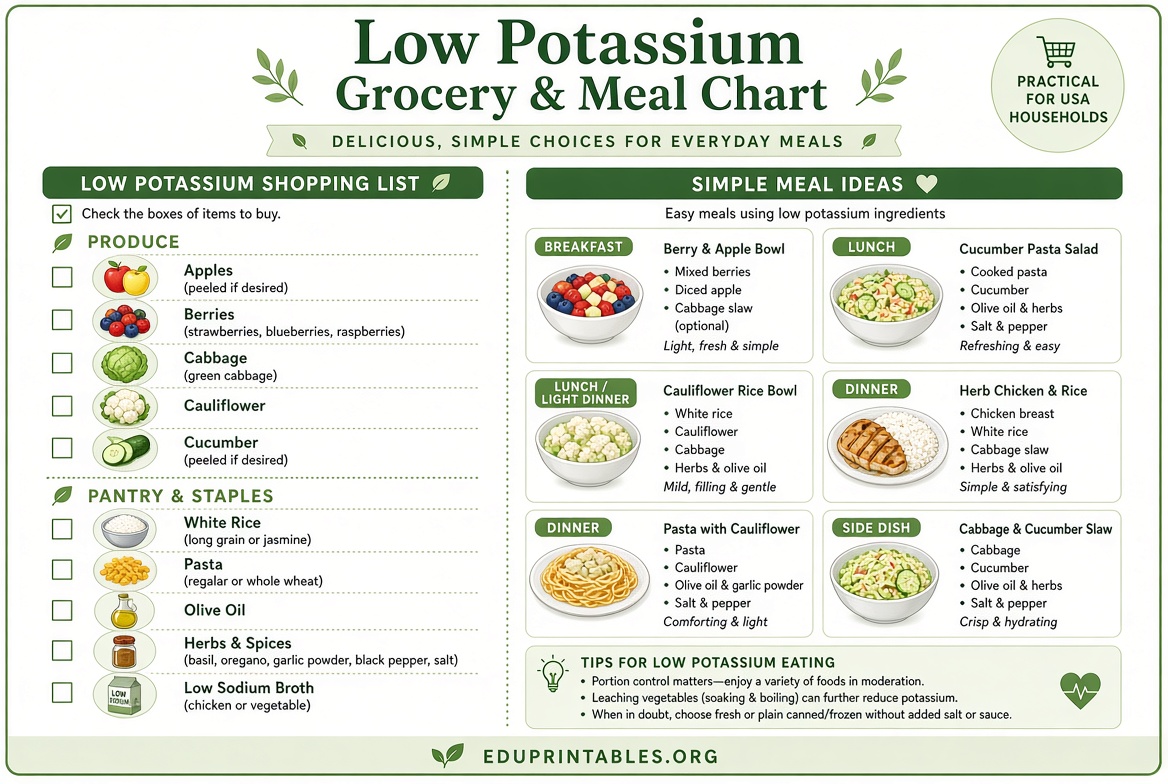
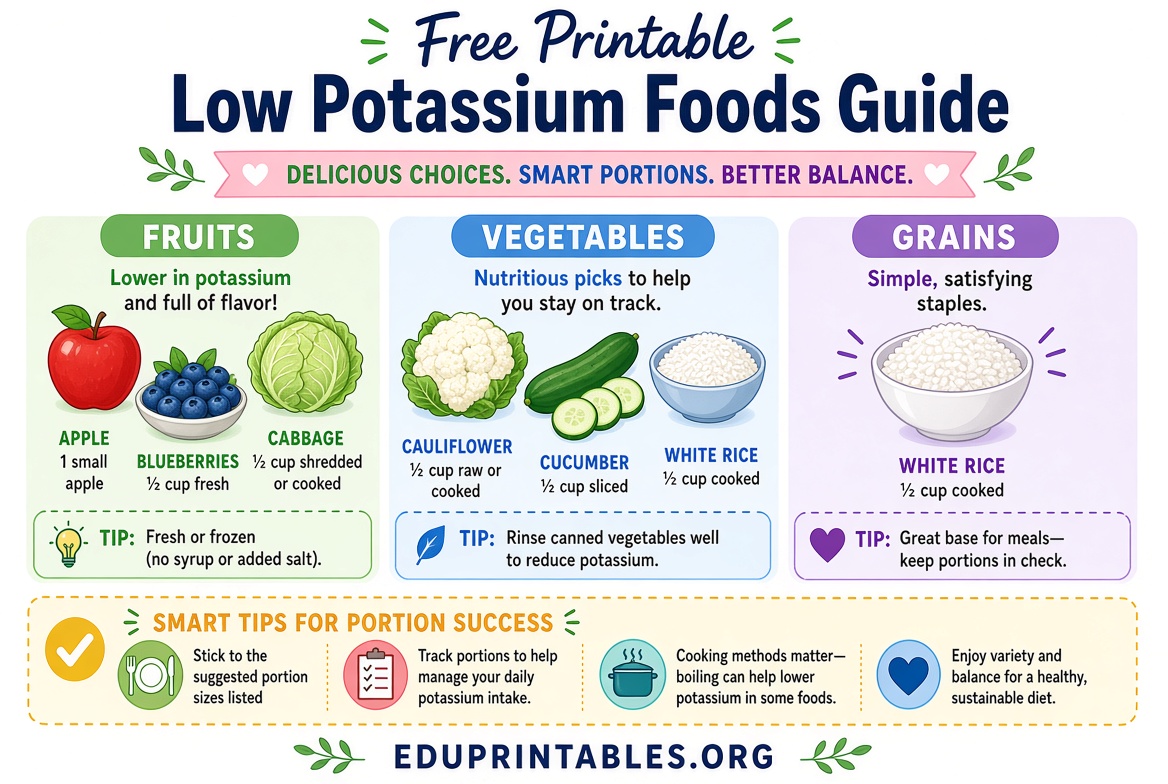
Common low-potassium fruits include apples, blueberries, grapes, pineapple, strawberries, and watermelon (limited to about 1 cup). Low-potassium vegetables include cabbage, cauliflower, cucumber, green beans, lettuce, bell peppers, and zucchini. White rice, white pasta, and refined breads are also naturally lower than whole-grain or bran options.
High-potassium items to limit or avoid on a restricted plan typically include bananas, oranges, potatoes, tomatoes, avocado, beans, nuts in larger amounts, and dairy milk. Exact limits vary by individual lab results and medical advice.
Where to Find Free Printable Low Potassium Foods Charts?
Trusted organizations publish free, printable lists and guides. Always confirm the resource matches the guidance your doctor or dietitian has given you. The following five sources are among the most authoritative and useful for U.S. readers:
- National Kidney Foundation – Potassium in Your CKD Diet provides clear side-by-side lists of higher- and lower-potassium fruits, vegetables, and other foods, plus practical tips on leaching vegetables.
- National Kidney Foundation Potassium Flyer (PDF) is a concise, downloadable handout covering high- and low-potassium examples, serving-size reminders, and meal-planning tips.
- American Kidney Fund Potassium Food Guide (PDF) offers detailed tables organized by food group (protein, dairy, fruits, vegetables, grains) with low, medium, and high potassium ranges and specific milligram values.
- NIDDK Potassium Tips for People with CKD (PDF) from the National Institutes of Health lists lower- and higher-potassium fruits and vegetables along with general diet strategies.
- High- and Low-Potassium Foods List (printable one-pager) draws on USDA data to show everyday foods sorted by higher and lower potassium content per serving, designed for easy printing.
These documents are free to download or print for personal use. They are produced by established kidney and nutrition organizations rather than commercial recipe sites.
Free Printable Low Potassium Foods Chart Guide
How to Use a Low-Potassium Chart Effectively?
Start by noting your recommended daily potassium target (often discussed with a renal dietitian). Then review the chart by food group so you can build balanced meals. Keep a simple log for a few days to see how typical portions add up.
Pay attention to preparation methods. Draining canned fruits and vegetables removes some potassium that has leached into the liquid. For certain higher-potassium vegetables, a leaching process (soaking sliced pieces in water before cooking) can lower content further—details appear in the National Kidney Foundation materials linked above.
Check nutrition labels on packaged foods. Potassium is now listed on many U.S. Nutrition Facts panels, making it easier to compare similar products. Avoid salt substitutes that contain potassium chloride unless your healthcare team approves them.
Practical Tips for Everyday Meals
Build plates around lower-potassium bases such as white rice or pasta, then add a moderate portion of low-potassium vegetables and a controlled serving of protein (chicken, egg, or fish in amounts your dietitian suggests). Fruit can serve as a snack or dessert when portioned according to the chart.
When eating out, choose restaurants that prepare food to order and ask for sauces or high-potassium sides on the side. Plan lower-potassium choices earlier in the day if a meal may include a higher-potassium item in a small amount.
Store printed charts in the kitchen or on a phone for quick reference while grocery shopping. Update your list periodically if lab results or medical recommendations change.
Frequently Asked Questions
How much potassium is typically allowed on a low-potassium diet?
Many people with advanced kidney disease aim for roughly 2,000–3,000 mg per day, but the exact number depends on individual blood tests and is set by a healthcare provider.
Can I still eat fruits and vegetables?
Yes. Focus on the lower-potassium options listed in the charts above and stay within recommended serving sizes. Variety remains important for overall nutrition.
Are these free printables medical advice?
No. They are educational tools. Always follow the specific plan given by your doctor or registered dietitian, especially if you have kidney disease or take medications that affect potassium levels.
Using a free printable low potassium foods chart from a trusted source makes daily choices clearer and helps keep intake aligned with medical goals. Download one or more of the resources linked above, review them with your care team, and keep them handy for shopping and meal planning.