Printable Eye Drop Medication Chart | Free Guides – Managing multiple eye drop prescriptions can feel overwhelming, especially after cataract surgery, for glaucoma, dry eye, or allergies. A printable eye drop medication chart helps you track doses, times, which eye, and whether you completed each application. These simple tools reduce missed doses and make it easier to follow your doctor’s instructions.
This resource page explains how these charts work, why they matter for U.S. patients, and where to find legitimate free printables from trusted sources.
Why Use a Printable Eye Drop Medication Chart?
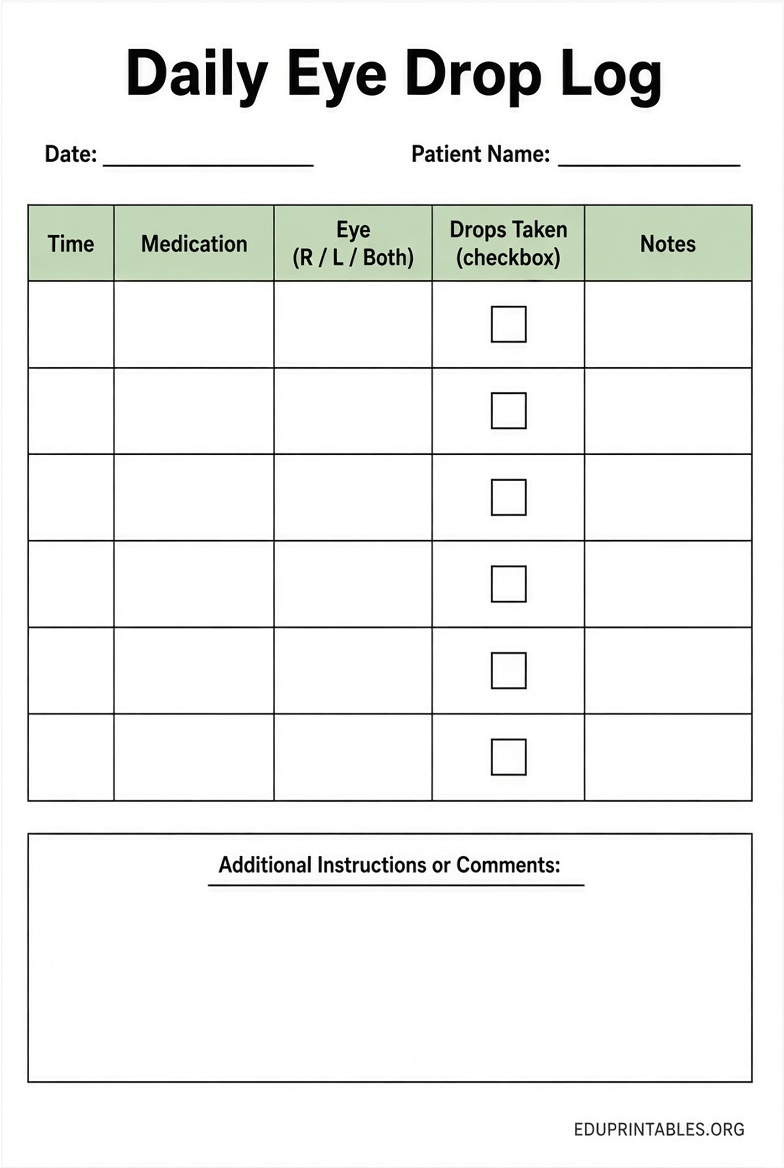
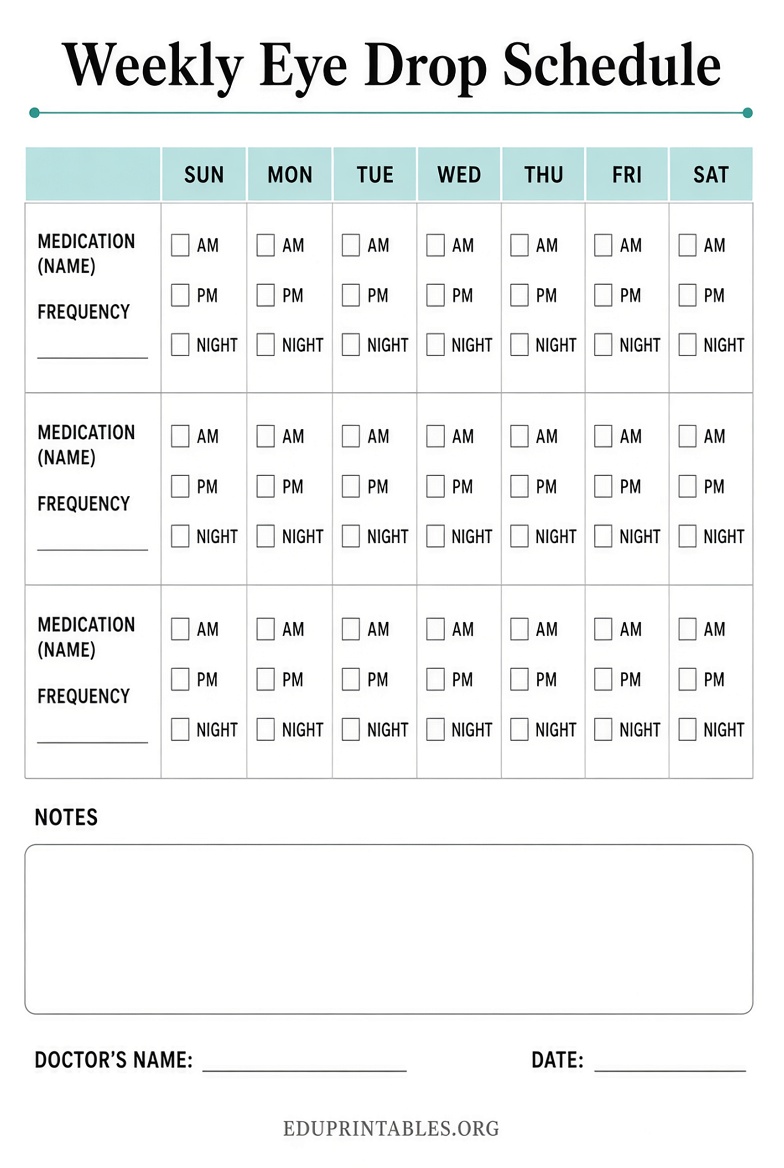
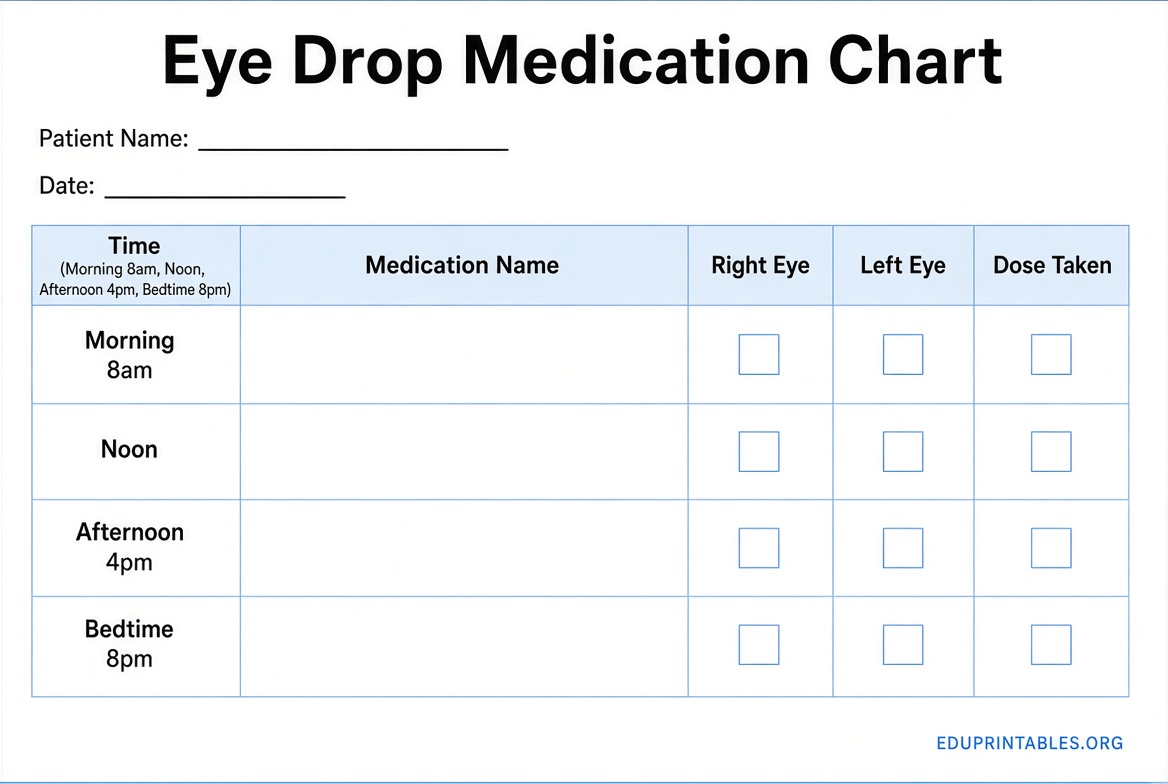
Eye drops often require specific timing (for example, 4 times a day, with 5–10 minutes between different drops). Many regimens also taper over days or weeks. A chart gives you a clear daily or weekly grid to check off each dose.
Common uses include:
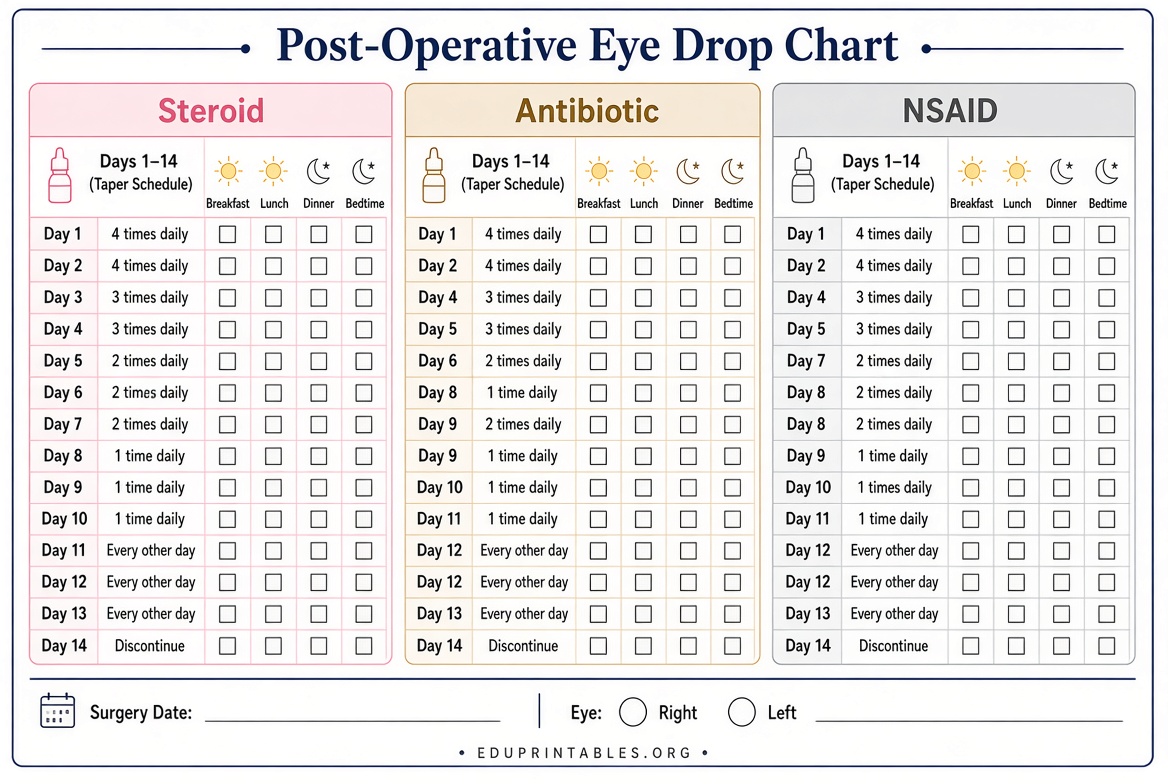
- Post-cataract or LASIK recovery schedules
- Glaucoma pressure-lowering drops
- Allergy or dry-eye regimens
- Tracking multiple medications with different cap colors
Color-coded bottle caps (a system endorsed by the American Academy of Ophthalmology) help identify classes of drops at a glance—pink for many steroids, tan for antibiotics, turquoise for certain glaucoma drops, and others. A chart that notes the medication name and cap color adds an extra safety layer.
How to Fill Out and Use Your Chart?
Keep the chart simple and consistent:
- Write the medication name, strength, and which eye (right, left, or both).
- List the prescribed frequency and exact times if given.
- Note any special instructions (shake well, refrigerate, wait between drops).
- Check off each dose as soon as you take it.
- Bring the completed chart to follow-up visits so your eye doctor can review adherence.
Store the printed page near your drops or attach it to the refrigerator. Many people pair a paper chart with phone reminders for best results.
Free Printable Resources from Trusted Sources
Here are authoritative, freely available options. Always confirm the schedule with your own ophthalmologist or optometrist—these are tools, not personalized medical advice.
One widely used post-surgical tracking sheet comes from UCLA Health. It provides checkboxes for steroid, antibiotic, and NSAID drops across multiple days, with space to mark breakfast, lunch, dinner, and bedtime doses. Download the free PDF directly:
UCLA Health Eye Drop Chart (PDF).
For a reference list of common allergy eye drops (generic and brand names, class, and typical dosing), the American Academy of Allergy, Asthma & Immunology offers a clear chart that can be printed and used alongside a personal log:
AAAAI Eye Drops Chart (PDF).
The American Academy of Ophthalmology provides step-by-step guidance on proper instillation technique, which pairs well with any chart:
AAO How to Put in Eye Drops.
These three sources stay within reliable medical organizations and avoid commercial or unverified downloads.
Printable Eye Drop Medication Chart | Free Guides
Practical Tips for Success
- Wash hands before every use and avoid touching the dropper tip to your eye or fingers.
- Wait at least 5 minutes between different drops so each one can absorb.
- Gently close your eyes and press the inner corner (near the nose) for 1–2 minutes after instilling to reduce drainage.
- If coordination is difficult, ask your doctor about assistive devices that help aim and squeeze the bottle.
- Never share eye drops. Discard bottles according to the label or your pharmacist’s advice.
Brief FAQ
Is a printable chart a substitute for my doctor’s instructions?
No. Always follow the exact regimen prescribed for you. Charts are organizational tools only.
Can I make my own chart?
Yes. A simple table with columns for date/time, medication, eye, and a checkmark works well. Use the free professional templates above as starting points.
What if I miss a dose?
Check with your eye doctor or pharmacist for guidance specific to that medication. Do not double up unless instructed.
A well-organized printable eye drop medication chart supports better adherence and clearer communication with your eye-care team. Download one of the free resources linked above, customize it to your prescription, and keep it handy. Consistent use helps protect your vision and makes complex drop schedules manageable.