Free Printable Low Purine Foods Chart | Gout Guide – A low purine diet is one of the most practical steps many Americans take to help manage gout or high uric acid levels. Purines are natural compounds found in many foods. When the body breaks them down, uric acid forms. High levels of uric acid can lead to painful gout flares.
A clear, printable low purine foods chart makes grocery shopping and meal planning simpler. It shows which everyday foods are generally lower in purines, which ones to limit, and which ones to avoid or use sparingly. This resource page explains the basics, lists practical categories, and points you to legitimate free printable charts and trusted U.S. sources.
What Is a Low Purine Diet?
A low purine diet focuses on foods that contain smaller amounts of purines while still providing balanced nutrition. Doctors and dietitians often recommend it alongside medication and lifestyle changes for people with gout or hyperuricemia.
Key goals include:
- Reducing the amount of purines you eat each day
- Supporting healthy weight
- Staying well hydrated
- Choosing overall healthy eating patterns similar to Mediterranean or DASH-style diets
Purine content is usually measured in milligrams per 100 grams of food. Common practical categories are:
- Low: under about 50–100 mg per 100 g
- Moderate: roughly 50–150 mg per 100 g
- High: over 150 mg per 100 g
Exact cutoffs vary slightly by source. Individual needs also differ based on kidney function, medications, and other health conditions. Always discuss major diet changes with your healthcare provider.
Foods Commonly Found on a Low Purine Chart
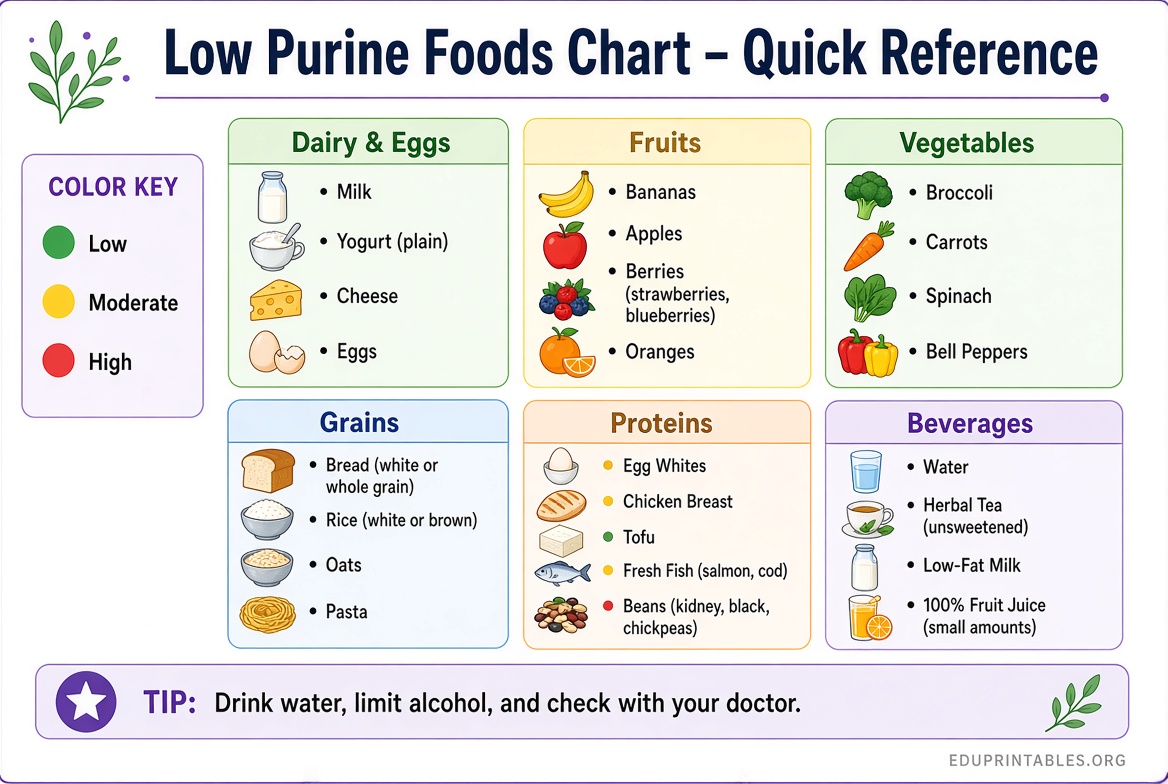
Most low purine foods charts group items by category. Here is a practical overview based on widely used U.S. guidance and laboratory data.
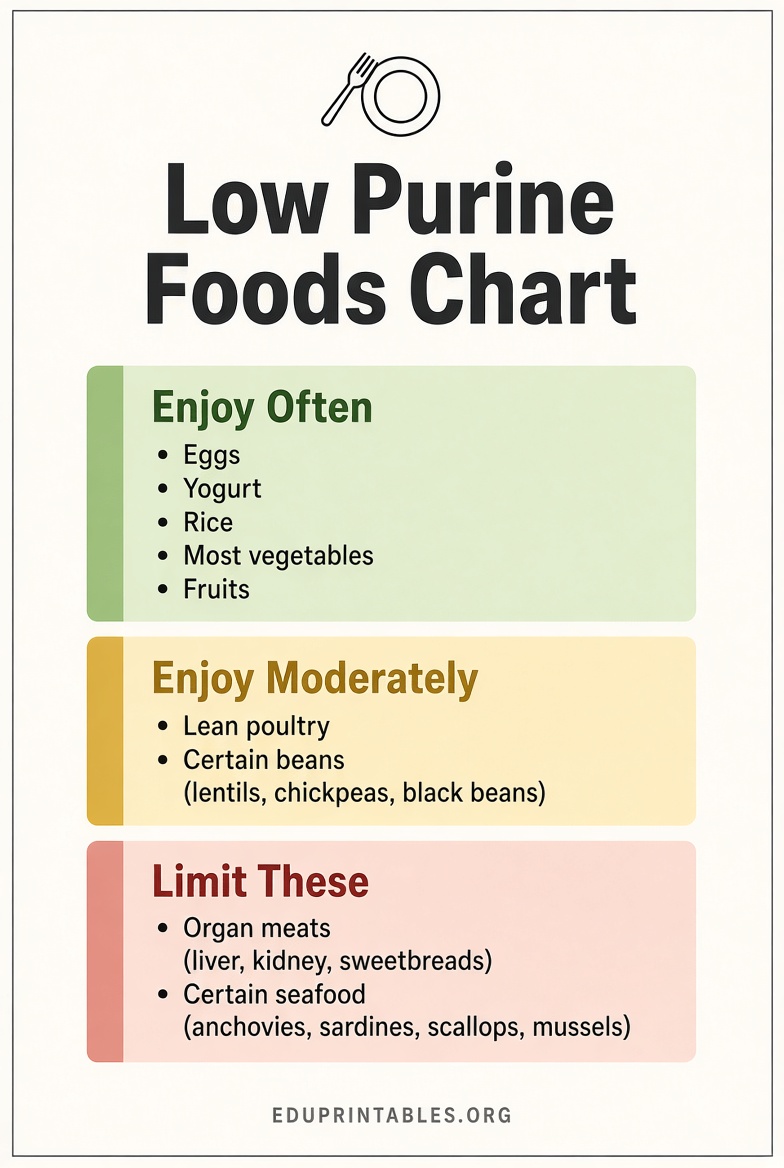
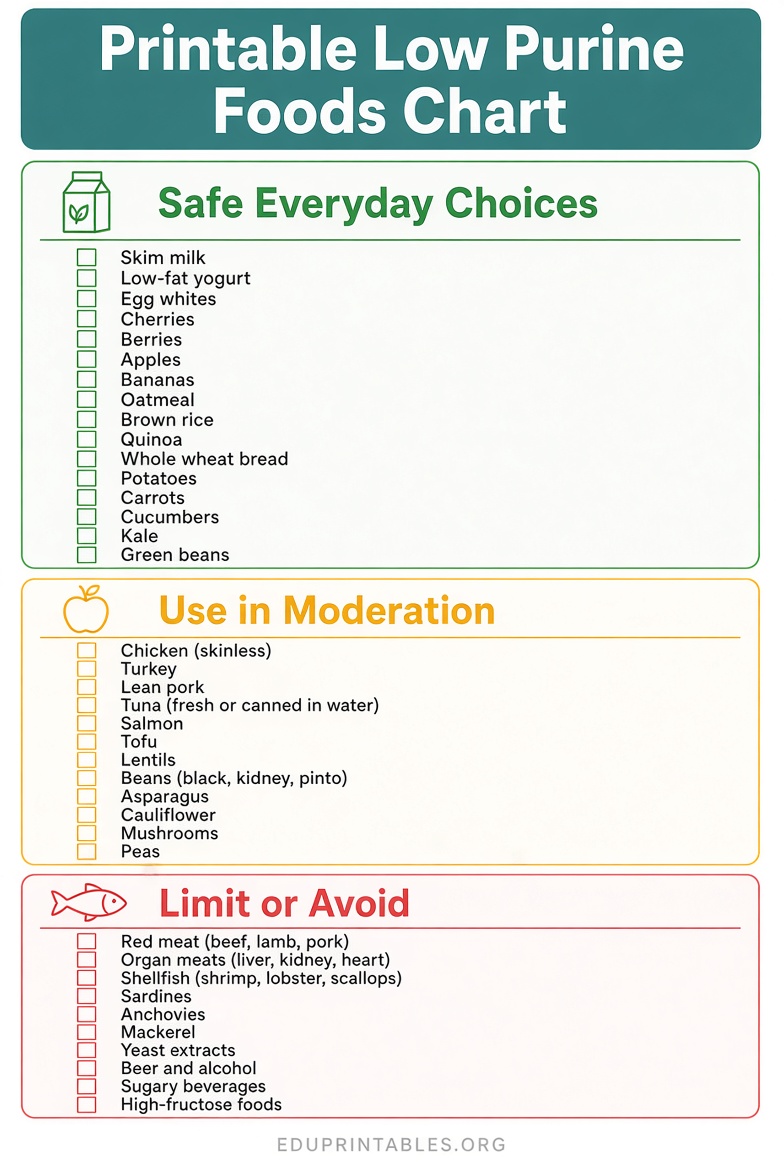
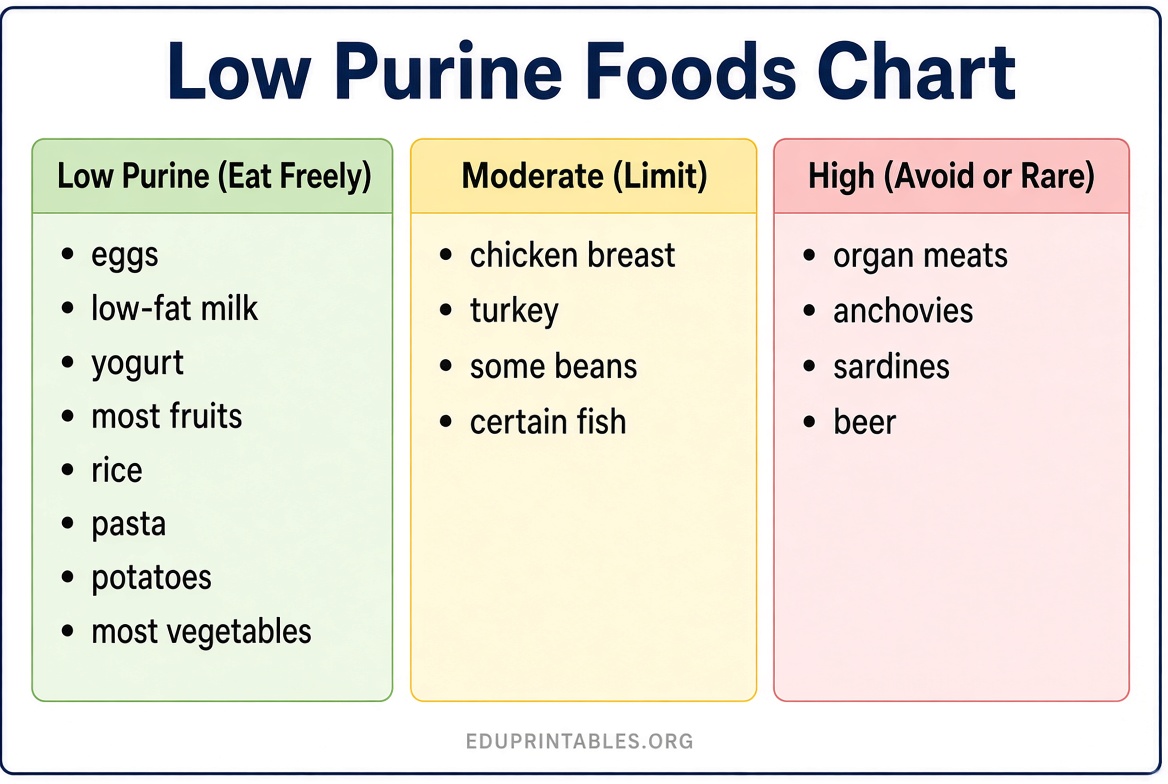
Generally low-purine choices (eat more freely):
- Low-fat or fat-free dairy: skim milk, low-fat yogurt, most cheeses
- Eggs
- Most fruits (cherries are often highlighted)
- Most vegetables (including many that were once restricted)
- Grains and starches: rice, pasta, bread, oatmeal, potatoes
- Nuts and seeds in moderate amounts
- Plant proteins such as tofu in reasonable portions
Moderate items (limit portion size and frequency):
- Lean poultry (skinless chicken or turkey)
- Some fish
- Certain legumes (especially dried beans weighed dry)
Higher-purine foods (limit or avoid, especially during flares):
- Organ meats (liver, kidney, sweetbreads)
- Certain seafood (anchovies, sardines, herring, some shellfish)
- Red meats in larger amounts
- Beer and some other alcoholic drinks
- Meat extracts, gravies, and yeast extracts
Research from major U.S. institutions shows that plant foods higher in purines, such as spinach or asparagus, do not raise gout risk the same way animal sources do. Low-fat dairy may even help lower uric acid for some people.
Free Printable Low Purine Foods Chart | Gout Guide
Where to Get a Free Printable Low Purine Foods Chart?
Several independent sites offer free, downloadable or printable charts based on published data. These are useful kitchen or shopping references. They are educational tools, not personalized medical advice.
One detailed free option organizes more than 140 common foods into color-coded low, medium, and high categories with values per 100 grams. You can print it directly from the page:
Free printable low purine diet chart (Uric Acid Low)
Another free PDF lists about 60 common foods with measured values from the USDA purine database and a major laboratory study. It includes a direct download link:
Printable purine chart PDF (Smart Gout Care)
These charts draw on laboratory measurements rather than outdated general lists. Print them, keep a copy on the refrigerator, or take one to the grocery store.
Trusted U.S. Guidance on Gout and Diet
For broader context beyond a single chart, consult these authoritative sources:
Mayo Clinic provides clear guidance on foods to emphasize, limit, and avoid, plus a sample daily menu:
Mayo Clinic gout diet overview
The Arthritis Foundation offers practical dos and don’ts focused on real-world eating:
Arthritis Foundation gout diet tips
The USDA and NIH maintain a scientific database of measured purine content in U.S. foods. Researchers and clinicians use it as a reference:
USDA/ODS-NIH Purine Content of Foods Database
These resources emphasize that diet is only one part of gout management. Medication, weight management, and hydration often play larger roles.
Practical Tips for Using a Low Purine Chart
- Focus on overall pattern rather than perfection. One higher-purine meal does not usually cause a flare by itself.
- Stay hydrated. Aim for plenty of water each day.
- Choose low-fat dairy regularly if you tolerate it.
- Limit alcohol, especially beer, during flares and in general.
- Watch added sugars and high-fructose corn syrup, which can also affect uric acid.
- Pair the chart with portion awareness. Even moderate foods become higher impact in large servings.
- Review the chart with your doctor or a registered dietitian, especially if you have kidney disease or take uric-acid-lowering medicine.
Brief FAQ
Is a printable low purine foods chart enough on its own?
No. It is a helpful reference tool. Individual recommendations depend on your lab results, medications, and overall health.
Do all high-purine vegetables need to be avoided?
Current evidence indicates that vegetables higher in purines do not increase gout risk the same way organ meats or certain seafood do. Most people can include them.
How often should I update my chart?
Purine data is refined over time as new laboratory measurements appear. Check the date on any printed chart and compare it with current trusted sources when possible.
Can I still eat meat on a low purine diet?
Many people include modest portions of lean poultry or certain fish while limiting organ meats, large servings of red meat, and high-purine seafood.
A printable low purine foods chart is a simple, practical aid for everyday decisions. Combine a free, evidence-based chart with guidance from Mayo Clinic, the Arthritis Foundation, and your healthcare team for the most useful results. Always seek personalized medical advice before making significant dietary changes.