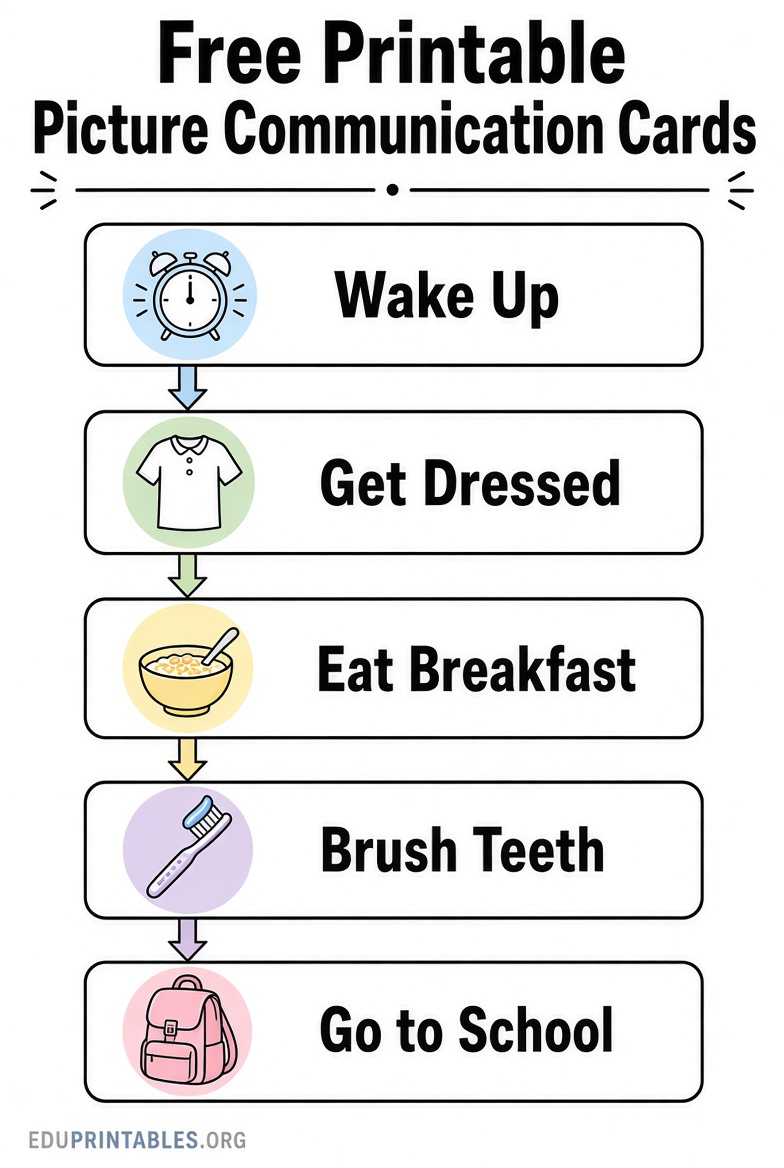
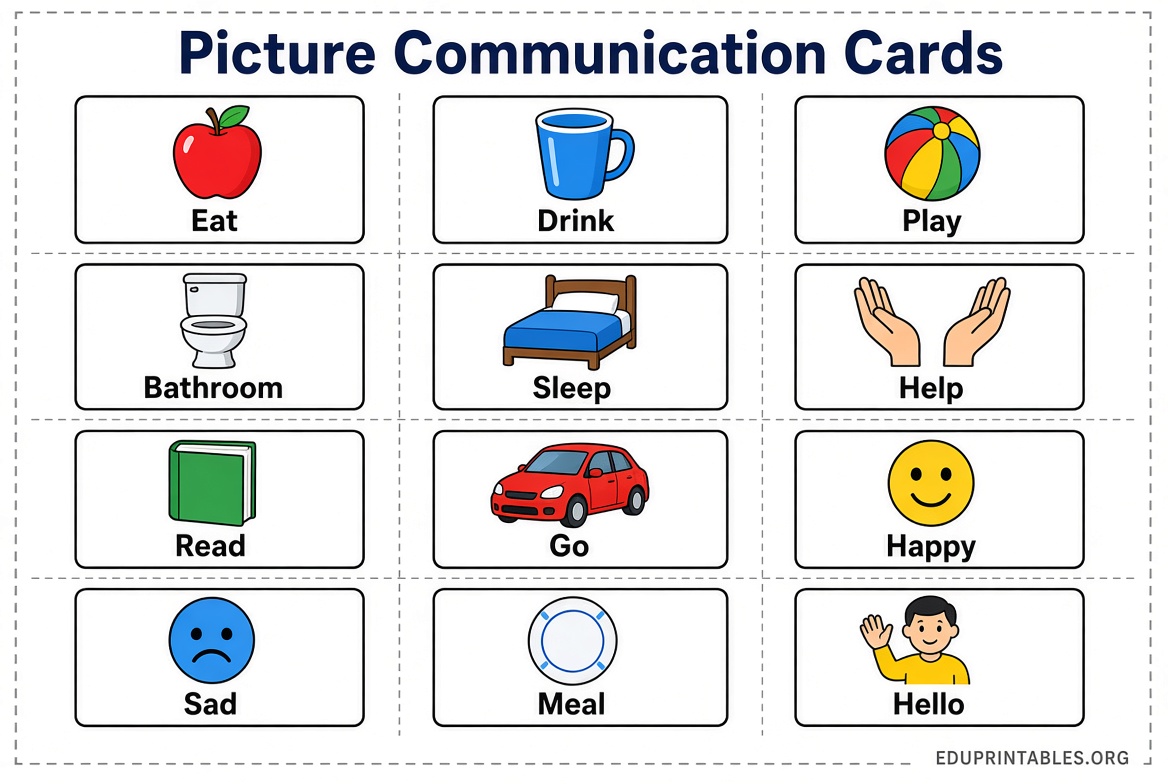
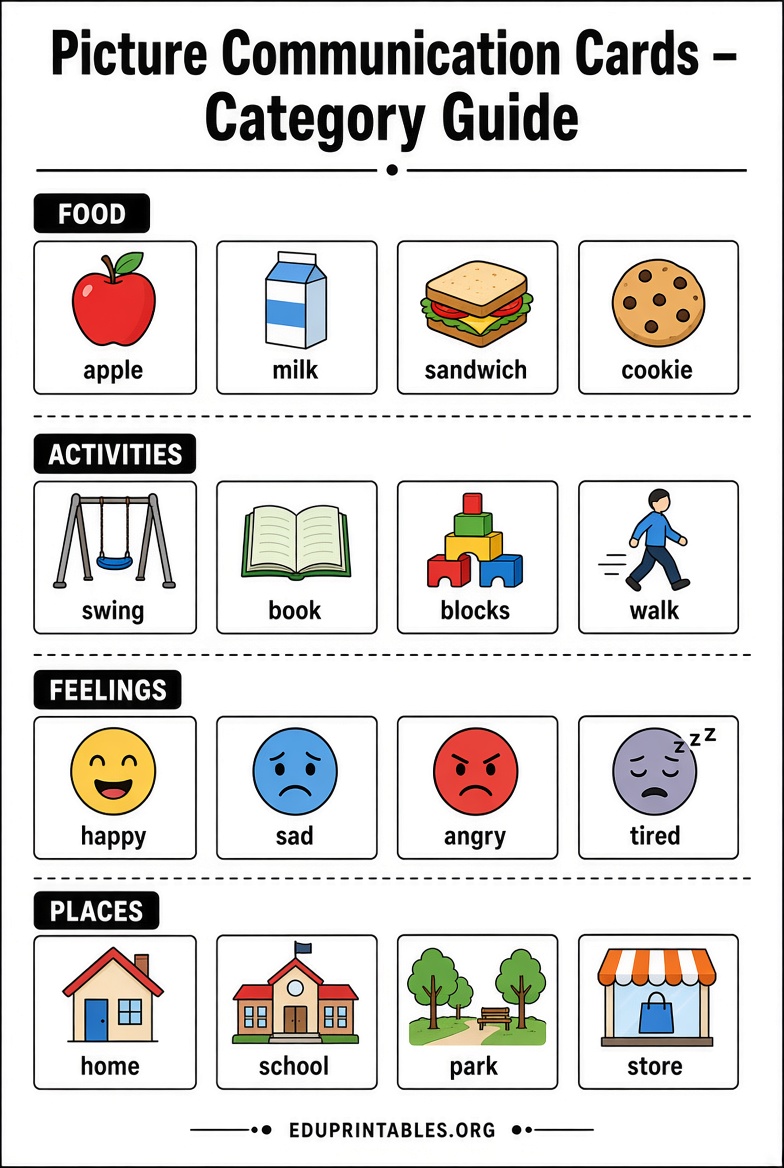
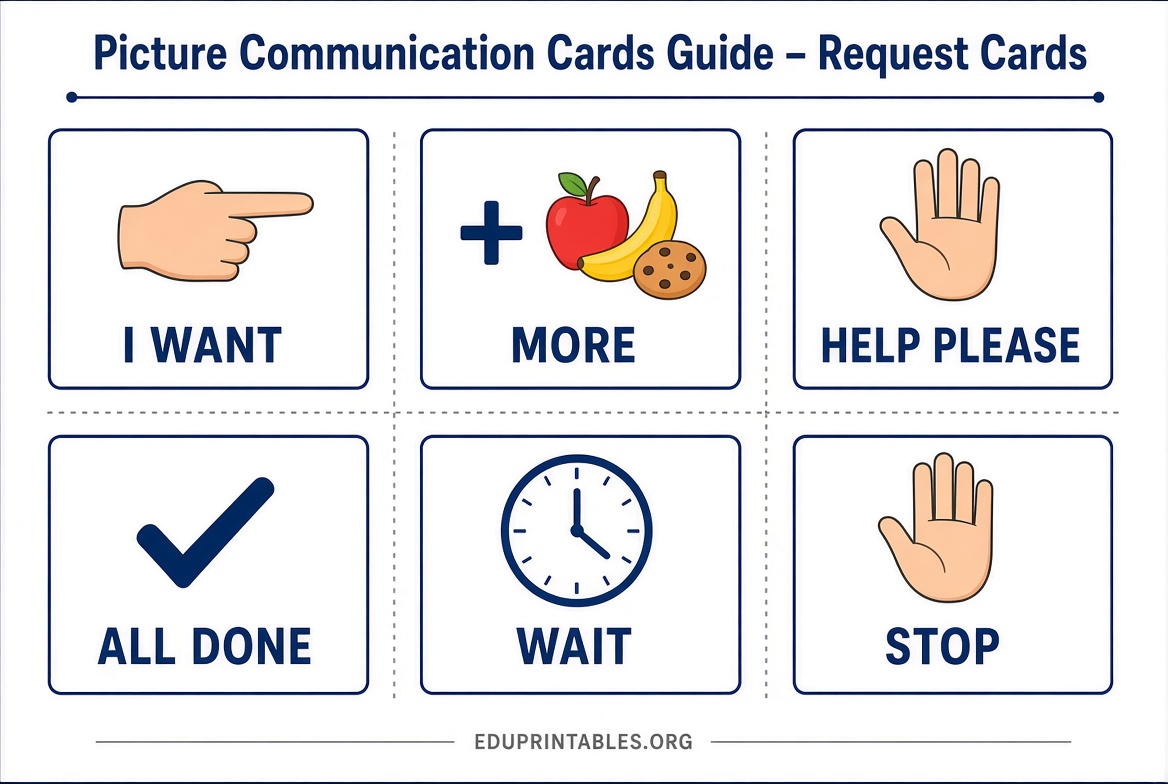
Free Printable Picture Communication Cards Guide – Picture communication cards help non-speaking or minimally verbal children and adults express needs, wants, feelings, and choices. These visual tools, often used in PECS (Picture Exchange Communication System) or broader AAC (Augmentative and Alternative Communication) approaches, pair simple images with labels. Users hand over or point to a card instead of relying only on speech.
Families, teachers, and therapists in the United States frequently search for free printable picture communication cards to support autistic children, those with speech delays, or individuals recovering from illness or injury. Ready-made or customizable sets make it easy to start without expensive software or materials.
This guide explains what the cards are, how to use them effectively, and where to find legitimate free printable resources.
What Are Picture Communication Cards?
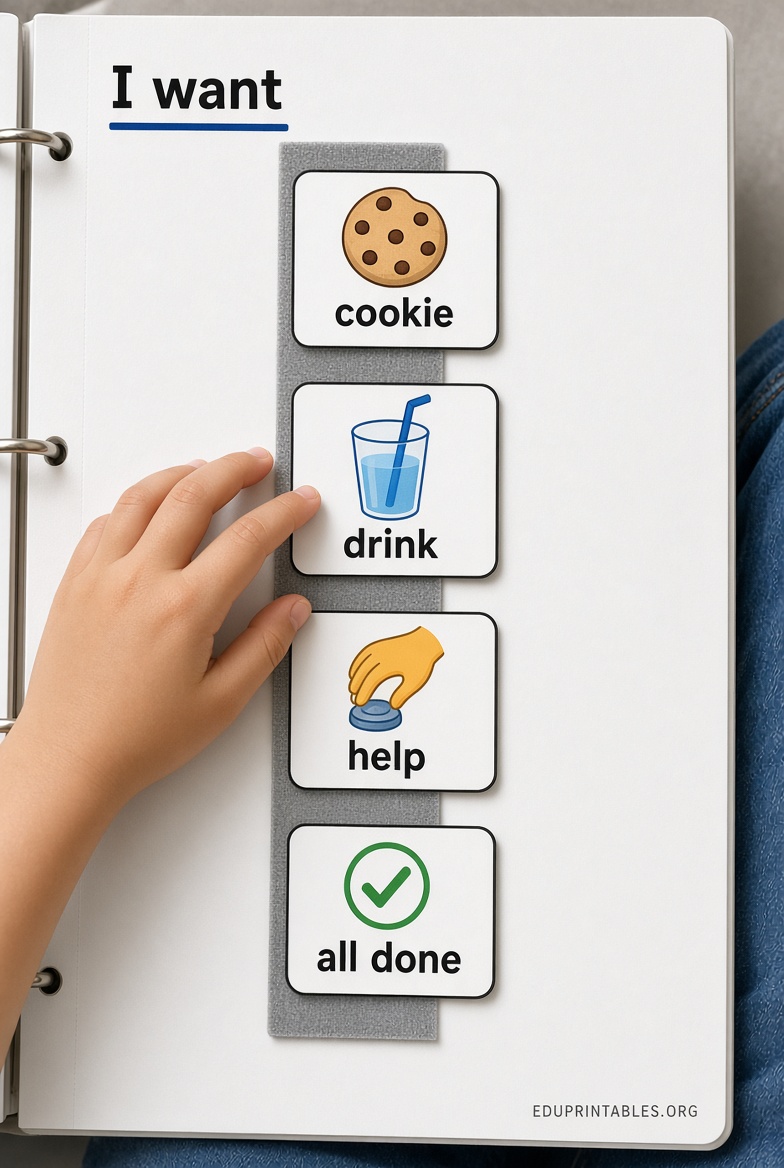
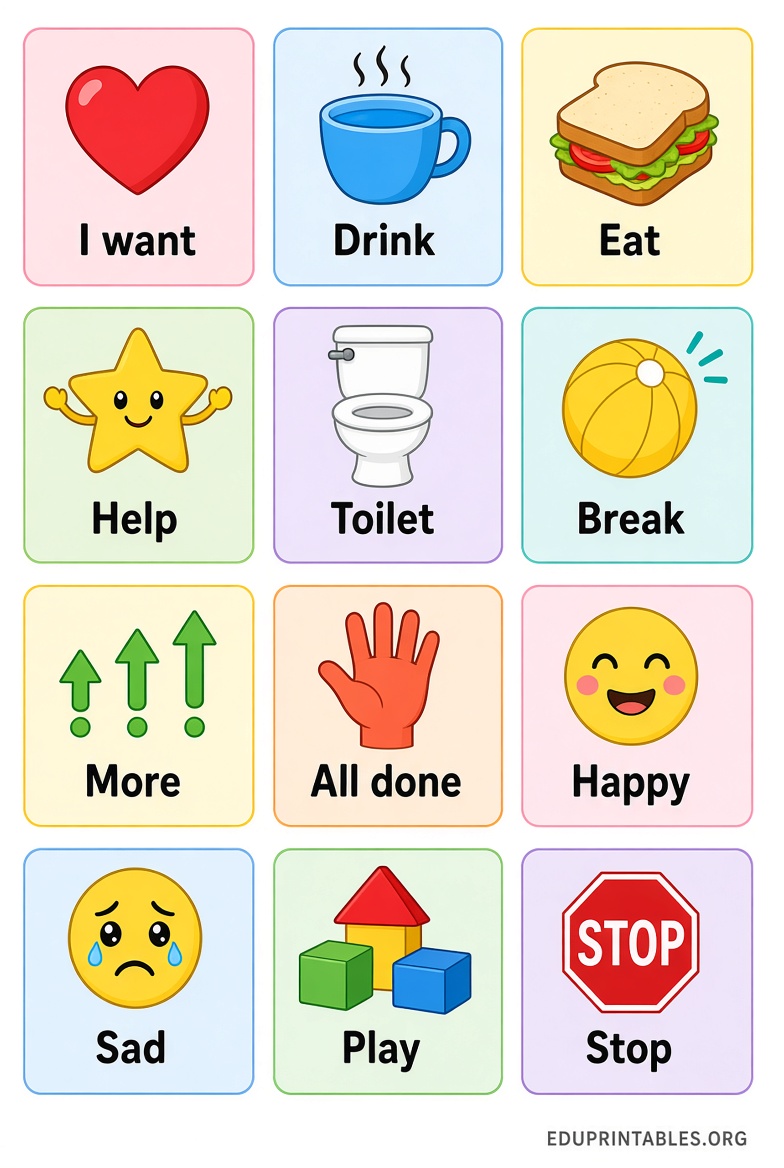
Picture communication cards are small printed images, usually 1.5 to 3 inches square, showing everyday items, actions, emotions, or people. Each card includes a clear picture and a short written label such as “drink,” “help,” “toilet,” or “happy.”
In the PECS approach, a child learns to hand a card to a communication partner in exchange for the requested item or action. This builds intentional communication step by step. Broader AAC use may involve pointing to cards on a board, arranging them into simple sentences, or combining them with other tools.
These cards work well at home, in classrooms, during therapy, or in medical settings. They reduce frustration, support independence, and give a reliable way to communicate when spoken language is limited or unavailable.
How to Use Free Printable Picture Communication Cards?
Start small. Choose a handful of highly motivating cards—favorite snacks, drinks, toys, or “break”—rather than an overwhelming full set.
Print the cards on cardstock for durability. Cut them out carefully. Laminate them or cover with clear packing tape so they withstand daily handling, spills, and chewing. Attach small hook-and-loop (Velcro) dots to the backs so cards stick to a binder, communication book, or strip.
Introduce one or two cards at a time. Model the exchange yourself: hand the child the card while showing the real item, then immediately give the item when they hand the card back. Keep sessions positive and short. Add more cards only after the first ones become reliable.
Many families keep a core set on the fridge or in a portable folder for use in the car, at school, or during outings. Pair the cards with consistent verbal modeling so the child hears the spoken word alongside the picture.
Trusted Sources for Free Printable Picture Communication Cards
Reliable free resources let you download or create cards without cost or complicated sign-ups. Here are some of the most useful and authoritative options available today.
One excellent starting point is the free PECS Card Maker from Spectrum Unlocked. You can choose symbols from a built-in library, upload your own photos of real objects, add labels, and download print-ready sheets. Ready-made templates for requests, feelings, food, routines, and potty training are also available. No account is required to begin.
Free PECS Card Maker and Templates
SEN Teacher has offered free special-needs printables since 1999. Their Symbol Cards tool lets you create customizable picture-exchange cards using thousands of Creative Commons symbols from ARASAAC and other libraries. Adjust size, style, and labels, then print or save as PDF.
SEN Teacher Symbol Cards
Kenhub provides free downloadable PDF communication cards designed for AAC use. These cover everyday needs, emotions, medical topics, and personal information in both color and high-contrast monochrome versions. They work well for children and adults, including in healthcare settings.
Kenhub Free AAC Communication Cards
Lingraphica offers free printable communication boards focused on basic wants and needs, conversational phrases, hospital and pain-related vocabulary, and more. Available in English and Spanish, these boards are practical for both home and clinical use.
Lingraphica Free Communication Boards
These sources prioritize accessibility and do not require payment for the core free materials. Always check the download page for any terms of use.
Free Printable Picture Communication Cards Guide
Tips for Making Cards Last and Work Well
Print extras of high-use cards so replacements are ready when one gets damaged. Store sets in a binder with clear pages or a small accordion folder for portability.
Use real photos of your child’s actual toys, foods, or family members when possible—these often work better than generic symbols for early learners. Keep labels simple and consistent with the language your family already uses.
Combine cards with a visual schedule or choice board when helpful. Remember that the cards themselves are only tools; consistent, responsive communication partners make the biggest difference.
Consult a speech-language pathologist or BCBA familiar with PECS or AAC for personalized guidance, especially if you are implementing a formal program.
Frequently Asked Questions
Are free printable picture communication cards the same as official PECS materials?
No. PECS is a trademarked, structured teaching method. Free printables inspired by picture exchange can support communication but do not replace training or official PECS resources from Pyramid Educational Consultants.
What age can children start using these cards?
Many children begin between ages 2 and 5, though older children, teens, and adults also benefit. Readiness depends more on motivation and ability to grasp and hand over a card than on chronological age.
Do I need to laminate every card?
Laminating or using clear packing tape greatly increases durability, especially with young children. It is strongly recommended for daily-use sets.
Can I use these cards alongside an AAC app?
Yes. Many families use printed cards at home or in the car and an app for outings or school. Consistency across tools helps the child generalize skills.
Free printable picture communication cards give families and educators an accessible starting point for supporting functional communication. Download a small set today, introduce it with patience and positive reinforcement, and expand as skills grow. These simple tools can open meaningful ways for non-speaking individuals to connect with the people around them.