Free Printable UN3481 Label | Lithium Battery Guide – Shipping lithium-ion batteries packed with or contained in equipment requires the correct UN3481 identification. Many U.S. shippers need a free printable UN3481 label (also called the lithium battery mark) to meet Department of Transportation (DOT) and international rules without buying pre-printed stock for every small shipment.
This page explains what the mark means, when it is required, key size and design rules, and where to download a legitimate free printable version. Always confirm current requirements in the official regulations before shipping, as rules can change and carrier policies vary.
What Is a UN3481 Label?
UN3481 is the United Nations identification number for lithium-ion batteries (including lithium-ion polymer) that are either contained in equipment or packed with equipment. Examples include a laptop with its battery installed, a power tool shipped with a separate battery in the same box, or similar devices.
This differs from UN3480, which applies to standalone lithium-ion batteries shipped without any equipment. The correct number determines packaging instructions, quantity limits, documentation, and whether passenger aircraft are allowed.
The “UN3481 label” most people search for is the lithium battery mark—a rectangular or square mark with red hatched borders, a black battery-group symbol (one battery damaged and emitting flame), the text “UN3481,” and space for a telephone number for additional information. Fully regulated (Section I) shipments may also need the diamond-shaped Class 9 lithium battery hazard label.
When Do You Need the UN3481 Lithium Battery Mark?
Under U.S. Hazardous Materials Regulations (49 CFR) and aligned international rules (IATA, ICAO, IMDG), most packages of lithium-ion batteries packed with or contained in equipment must display the lithium battery mark when they qualify for the exceptions in 49 CFR 173.185(c).
Exceptions exist. The mark is generally not required for packages containing only button cells installed in equipment, or for very small consignments (two packages or fewer, each with no more than four cells or two batteries contained in equipment). Fully regulated larger batteries often require the Class 9 hazard label in addition to (or instead of) certain marks, plus proper shipping papers.
Always check the specific packing instruction (PI 966 for packed with equipment or PI 967 for contained in equipment under IATA) and the watt-hour rating of the cells or batteries. State of charge limits and other restrictions also apply, especially for air transport.
Free Printable UN3481 Label | Lithium Battery Guide
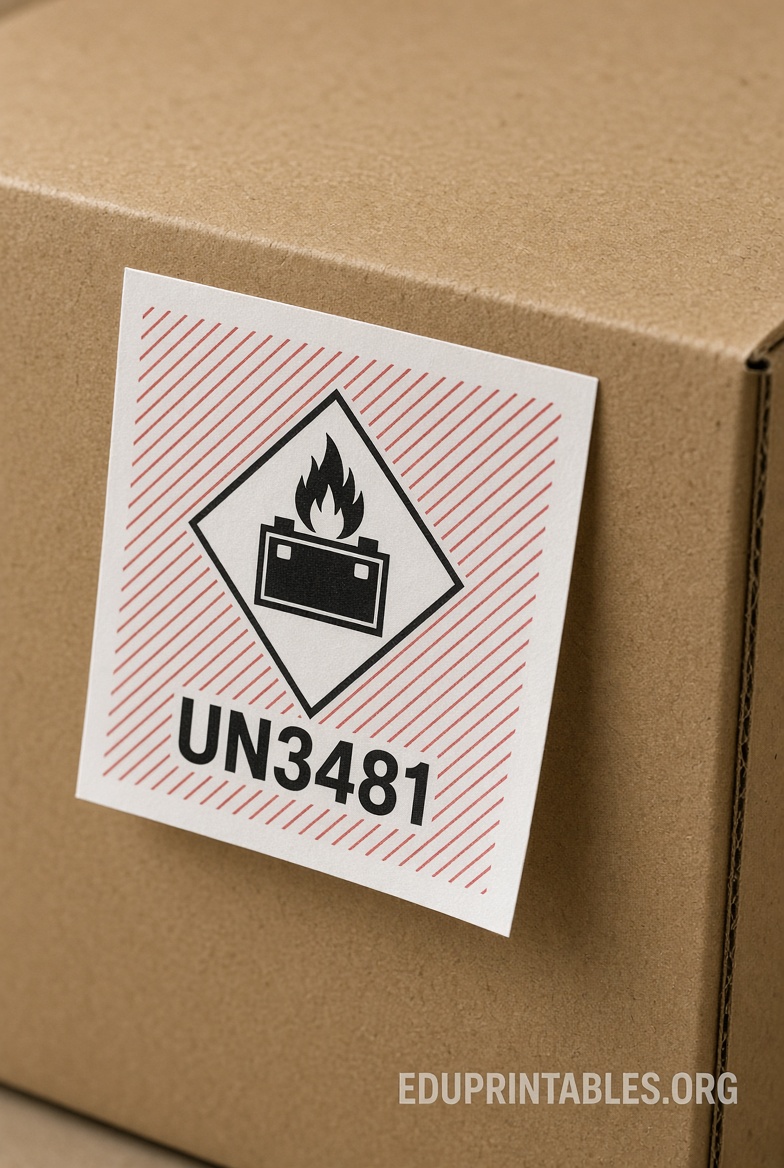
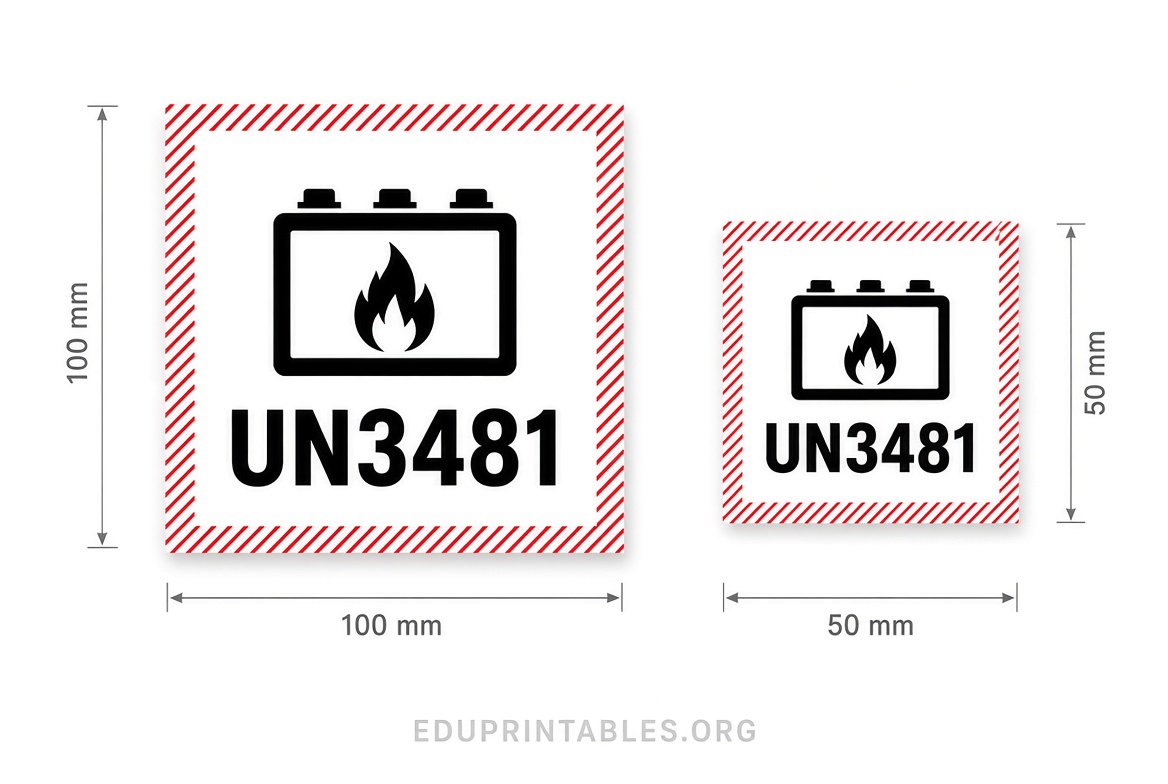
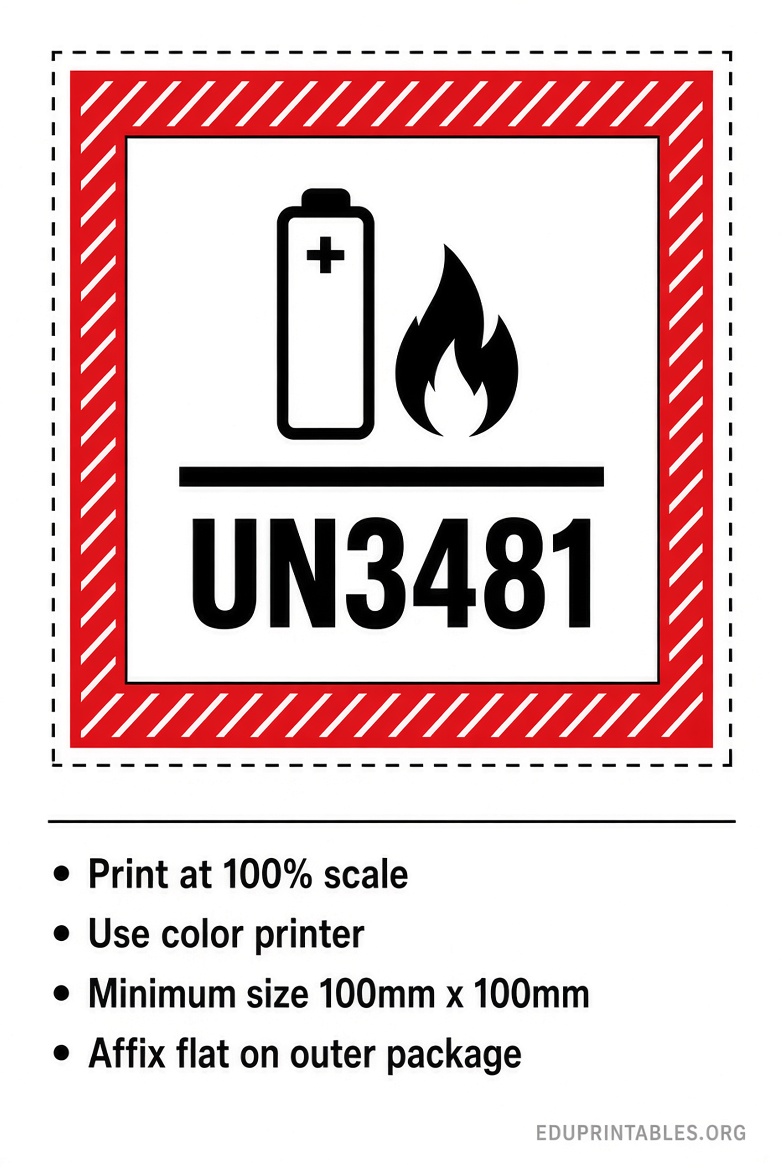
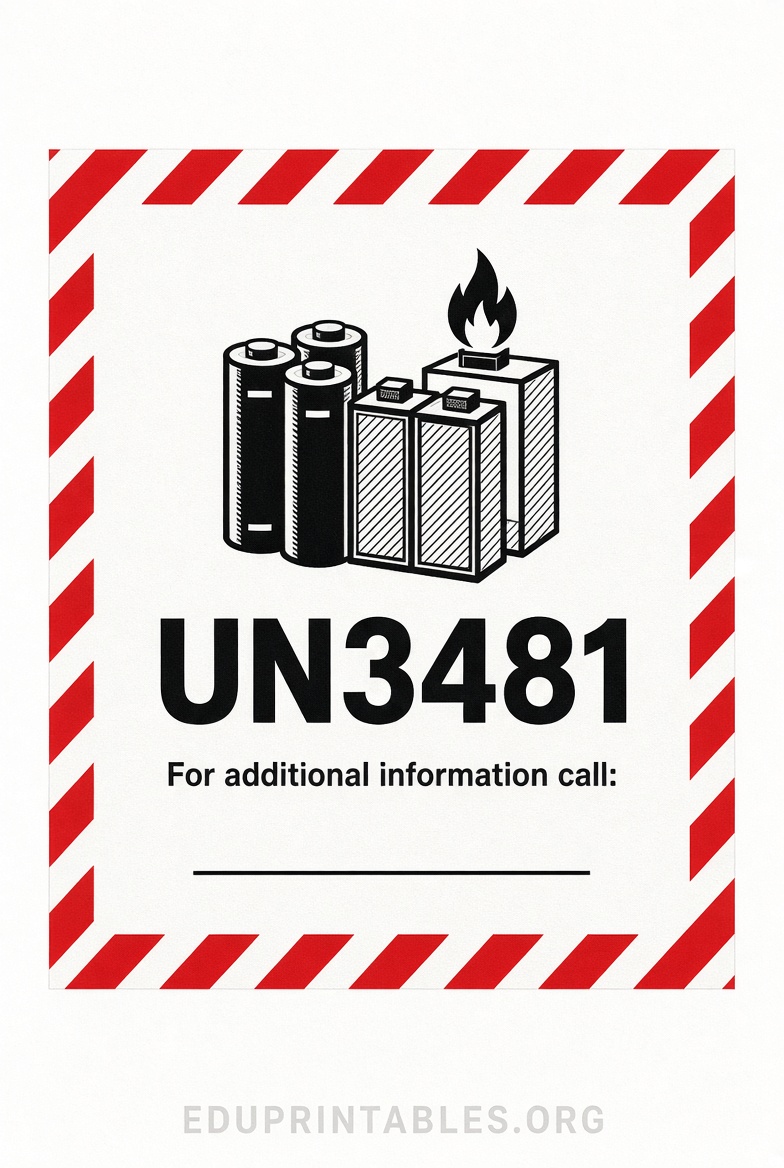
Size, Design, and Printing Requirements
The lithium battery mark must meet minimum dimensions and design standards so handlers can read it clearly:
- Minimum size is generally 100 mm × 100 mm (about 4 × 4 inches).
- On smaller packages that cannot accommodate the full size, a reduced mark of at least 100 mm × 70 mm is often permitted.
- Red hatched edging must be at least 5 mm wide.
- The UN number characters must be at least 12 mm high.
- Print in color on a contrasting background. Black-and-white copies usually fail inspection.
- Affix the mark flat on one side of the outer package so it is not folded over edges or seams.
Print at 100% scale with no “fit to page” scaling. Use durable adhesive or secure the printed sheet so it stays attached during normal handling.
Where to Get a Free Printable UN3481 Label?
A straightforward free PDF of the UN3481 lithium battery mark is available for download here:
Download free UN3481 Battery Label PDF.
Print it full-size in color, fill in any required telephone number for additional information if the template provides space, and apply it correctly.
For authoritative U.S. guidance on when and how to use the mark, consult the official PHMSA Lithium Battery Guide for Shippers:
PHMSA Lithium Battery Guide for Shippers.
Additional aviation-focused resources are maintained by the FAA:
FAA Lithium Battery Resources.
These sources prioritize compliance over convenience. Commercial pre-printed labels from reputable suppliers remain a good option for high-volume shippers because they are manufactured to exact durability and adhesion standards.
Practical Tips for Using a Free Printable UN3481 Label
- Verify the watt-hour rating and configuration of every battery before choosing UN3481 versus UN3480.
- Protect terminals against short circuit and prevent accidental activation of equipment.
- Keep a copy of the UN 38.3 test summary available when required.
- Double-check carrier-specific rules (UPS, FedEx, USPS, airlines) in addition to federal regulations.
- Never use an outdated “lithium battery handling label” design; the current mark with red hatching has been required for years.
Incorrect or missing marks can result in rejected packages, delays, fines, or safety incidents. When in doubt, contact the PHMSA Hazardous Materials Information Center or a qualified dangerous-goods specialist.
Brief FAQ
Is a free printable UN3481 label legal to use?
Yes, provided the printed mark meets the exact size, color, symbol, and placement requirements in the regulations. The content of the mark itself is standardized; the source of the paper does not matter as long as the final result is compliant.
Do I always need both the mark and the Class 9 diamond label?
No. Smaller exception shipments usually need only the lithium battery mark. Fully regulated shipments typically require the Class 9 lithium battery hazard label (and often shipping papers). Follow the applicable section of the packing instruction.
Can I use the same printable for ground and air shipments?
The mark design is multimodal, but quantity limits, state-of-charge rules, documentation, and additional labels differ by mode. Confirm requirements for the specific mode of transport.
Where can I confirm the latest rules?
Start with the current PHMSA Lithium Battery Guide and 49 CFR 173.185. International air shipments should also reference the latest IATA Dangerous Goods Regulations or ICAO Technical Instructions.
Using a correctly printed free UN3481 label helps keep lithium battery shipments moving safely and compliantly. Download the template, print it properly, apply it correctly, and always cross-check the official regulations for your specific shipment.