Free Printable Food Temperature Log – A free printable food temperature log helps restaurants, cafés, food trucks, schools, caterers, and home cooks track refrigerator, freezer, cooking, hot-holding, and cooling temperatures. Consistent logging keeps food out of the danger zone (roughly 41°F–135°F), supports FDA Food Code compliance, and gives health inspectors clear records.
This resource page explains why temperature logs matter, what to record, key U.S. safe temperatures, and where to download legitimate free printable food temperature logs and related charts.
Why Use a Food Temperature Log?
Temperature control is one of the strongest defenses against foodborne illness. Bacteria multiply quickly when food sits in the danger zone. A simple daily or shift log creates accountability, catches equipment problems early, and documents corrective actions.
Inspectors often review temperature records first. Gaps or blank corrective-action columns raise red flags. For home use, a basic fridge/freezer log helps confirm your appliances stay at safe levels and reduces waste after power outages.
Key Safe Temperatures for U.S. Food Operations
Follow these widely used FDA Food Code and USDA guidelines (always confirm your local health department rules, which may be stricter):
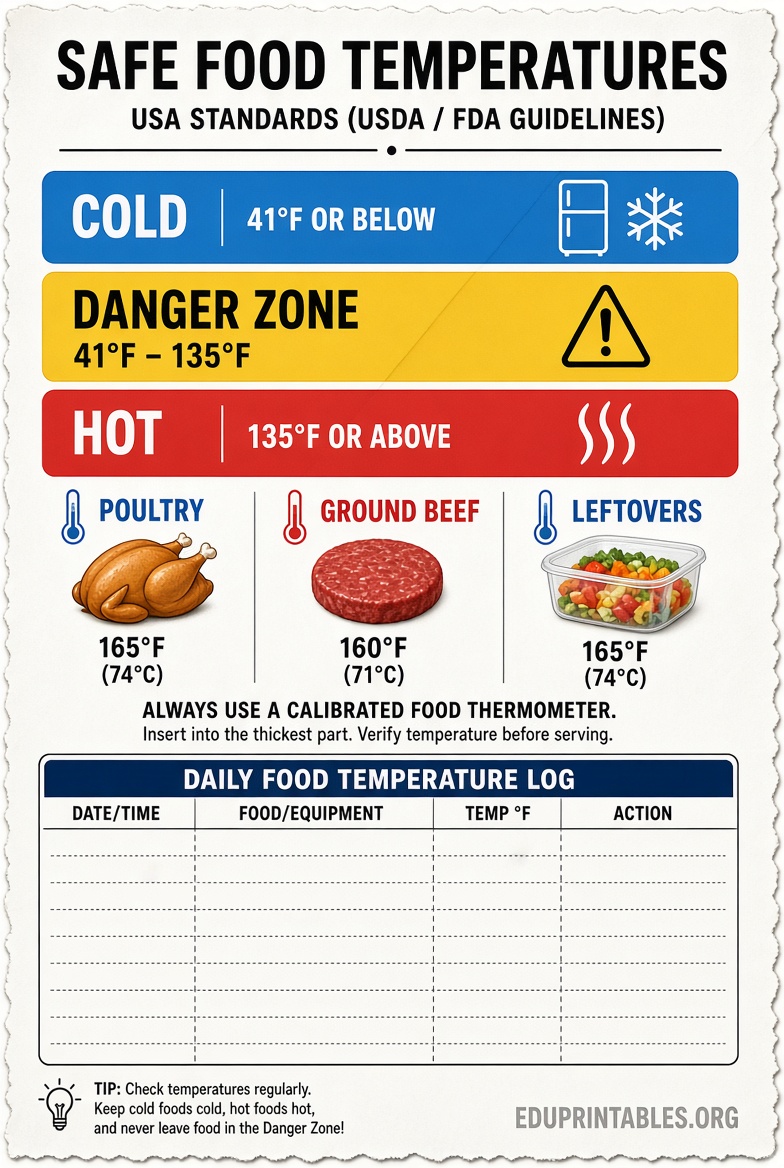
- Refrigerator / cold holding: 41°F or below (many aim for 40°F or lower).
- Freezer: 0°F or below.
- Hot holding: 135°F or above.
- Reheating for hot holding: 165°F.
- Cooking minimum internal temperatures (use a calibrated food thermometer):
- Poultry (whole or ground): 165°F
- Ground meats: 160°F
- Beef, pork, veal, lamb steaks/roasts/chops: 145°F + 3-minute rest
- Fish: 145°F
- Leftovers and casseroles: 165°F
Official charts are available from FoodSafety.gov.
Cooling cooked food follows a two-stage process in many codes: from 135°F to 70°F within 2 hours, then to 41°F or below within an additional 4 hours.
What to Include on a Free Printable Food Temperature Log?
A practical log needs space for:
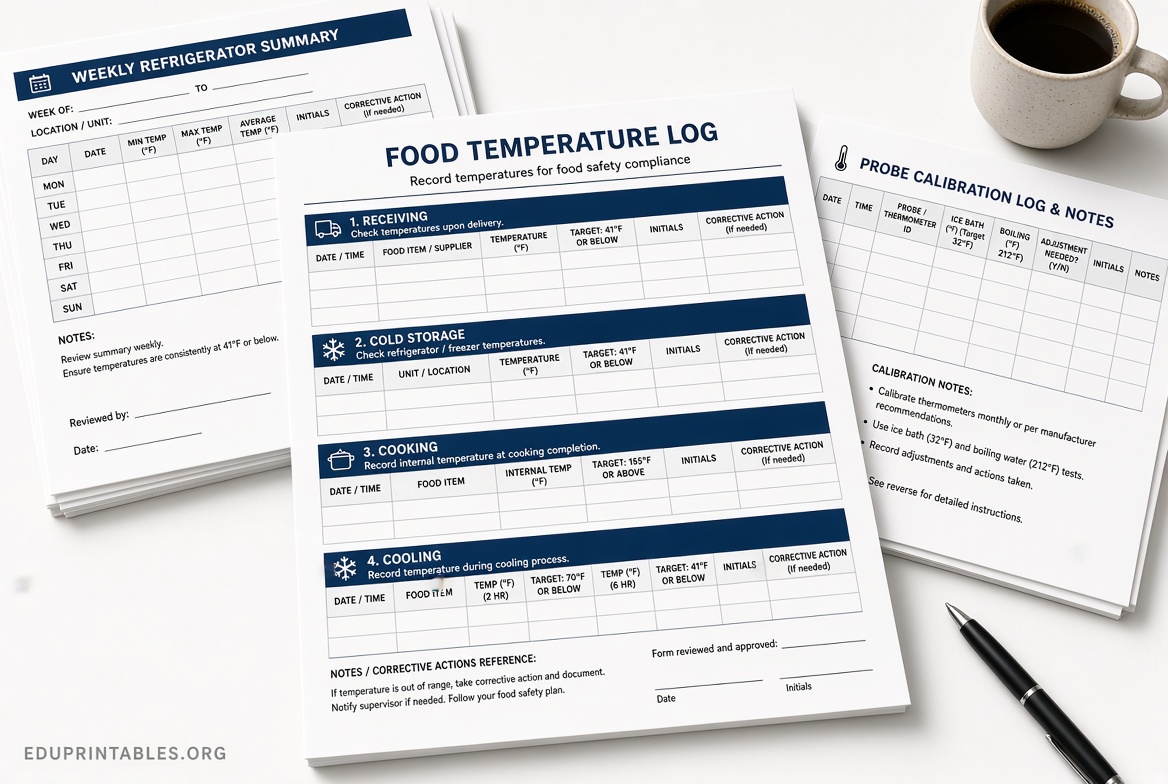
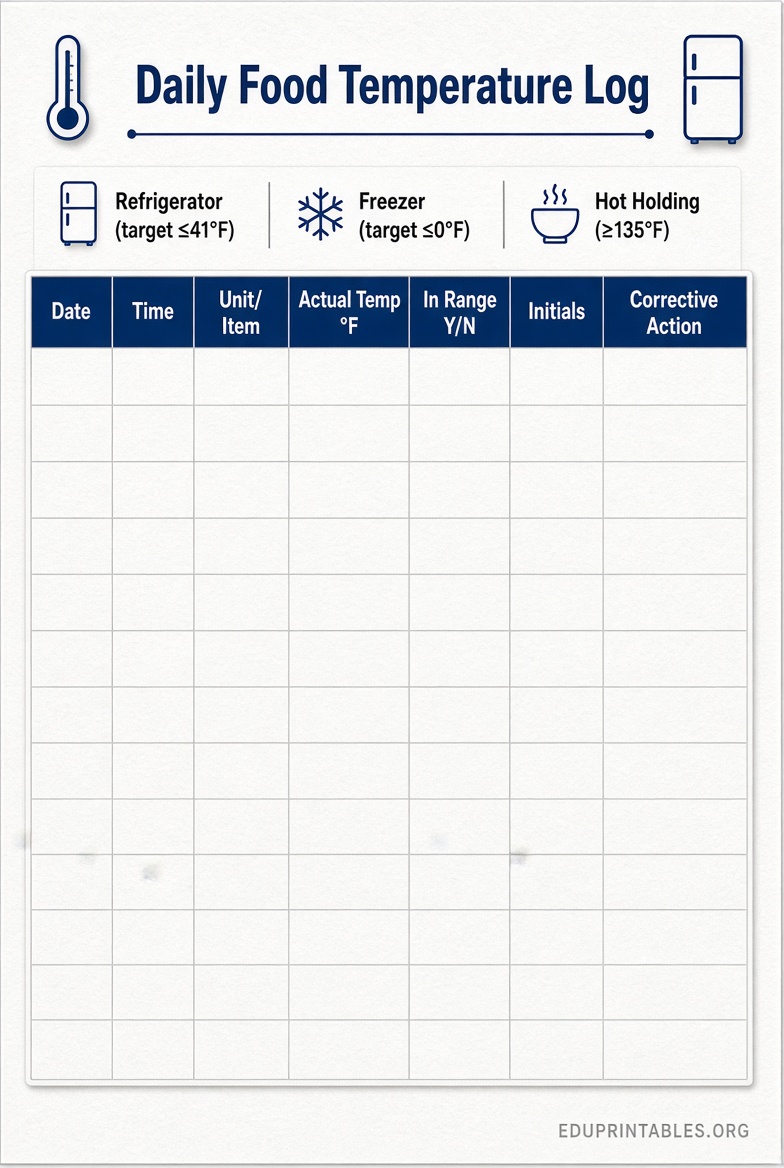
- Date and time of each check
- Equipment ID or food item
- Actual temperature reading
- Target/critical limit
- Staff initials or signature
- Corrective action taken (if out of range)
- Optional manager review/verification
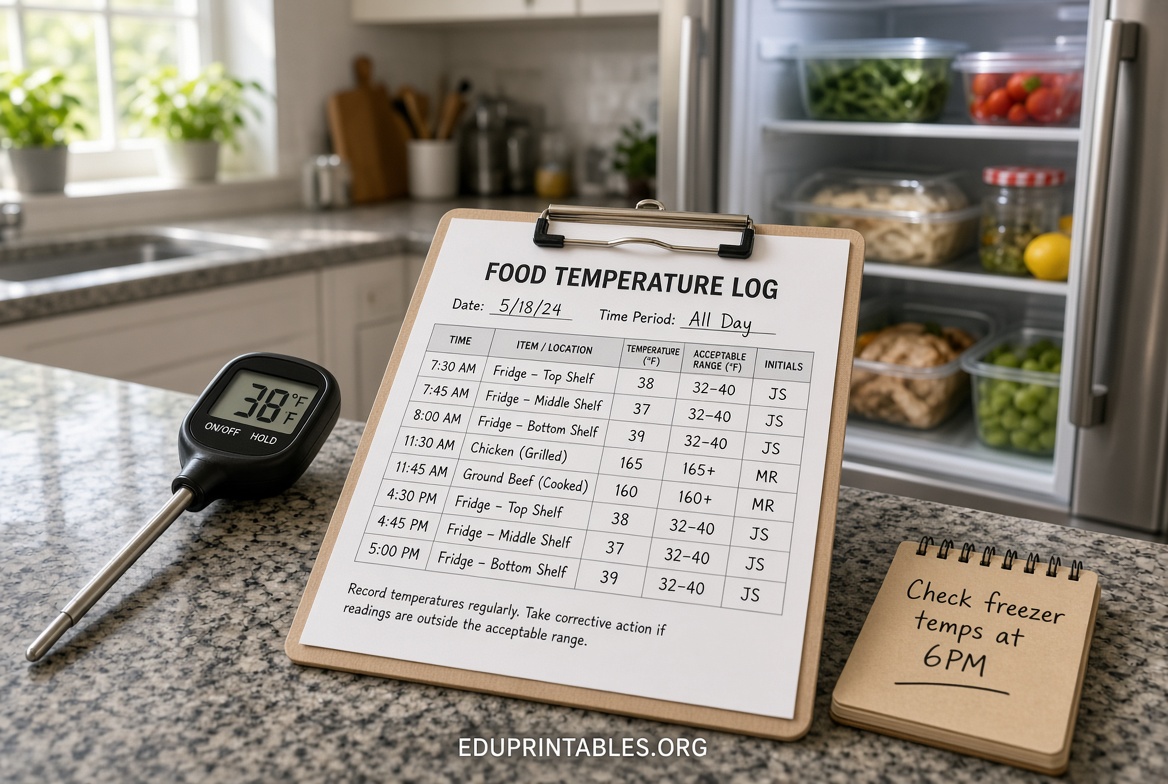
Check refrigerators and freezers at least at open and close (more often for high-risk units). Probe actual food temperatures in addition to air readings when possible. Calibrate thermometers regularly (ice-point method is simple and free).
Free Printable Food Temperature Logs and Charts
Here are current, legitimate free resources focused on U.S. needs. Download and adapt them to your operation and local code.
- Free Daily Temperature Log (°F / FDA-aligned) covering cold holding, hot holding, cooking by food type, and two-stage cooling: available as a printable PDF from Miratag. Download the free PDF.
- Free Food Temperature Log Template (US) with sections for receiving, cold holding, hot holding, cooking/reheating, and corrective actions, plus FDA-based guidance: free PDF download with no signup required from TrainedTeam. Get the free printable.
- Free Daily Temperature Log Template (audit-ready PDF) with fields for equipment ID, readings, critical limits, initials, and corrective action: direct free download, no email needed, from AuditBinder. Download the free template.
- Official Safe Minimum Internal Temperature Chart for cooking from FoodSafety.gov (print or download). View the FoodSafety.gov chart.
These templates are starting points. Customize unit names, check frequencies, and exact critical limits to match your menu, equipment, and local requirements. Keep completed logs for the retention period required by your jurisdiction (often 1–2 years or longer).
Free Printable Food Temperature Log
Practical Tips for Using Your Log
Place the sheet or clipboard near the equipment so checks happen in real time. Train staff on both the numbers and the corrective actions (chill, reheat to 165°F, or discard). Review logs weekly for patterns such as a unit that drifts warm.
For home users, a simple weekly fridge/freezer log taped to the appliance door is enough. After any power outage longer than a few hours, check temperatures and discard perishable food that stayed above 40°F for more than 2 hours.
Digital options exist and can reduce errors, but a free printable food temperature log remains reliable, low-cost, and inspection-friendly for many operations.
Brief FAQ
How often should temperatures be logged?
At minimum, opening and closing for cold storage; more frequently during service for hot holding and high-risk items. Match your risk assessment or local code.
What if a reading is out of range?
Document the time, take immediate action (move food, adjust equipment, discard if necessary), and write the corrective action on the log. Blank action boxes are a common inspection finding.
Do I need a special thermometer?
Use a calibrated probe thermometer. Sanitize between uses. Check calibration regularly.
A consistent free printable food temperature log is simple, free, and one of the most effective tools for keeping food safe. Download one of the resources above, post the official cooking chart nearby, and make temperature checks part of every shift. Always verify details against your local health authority for full compliance.